



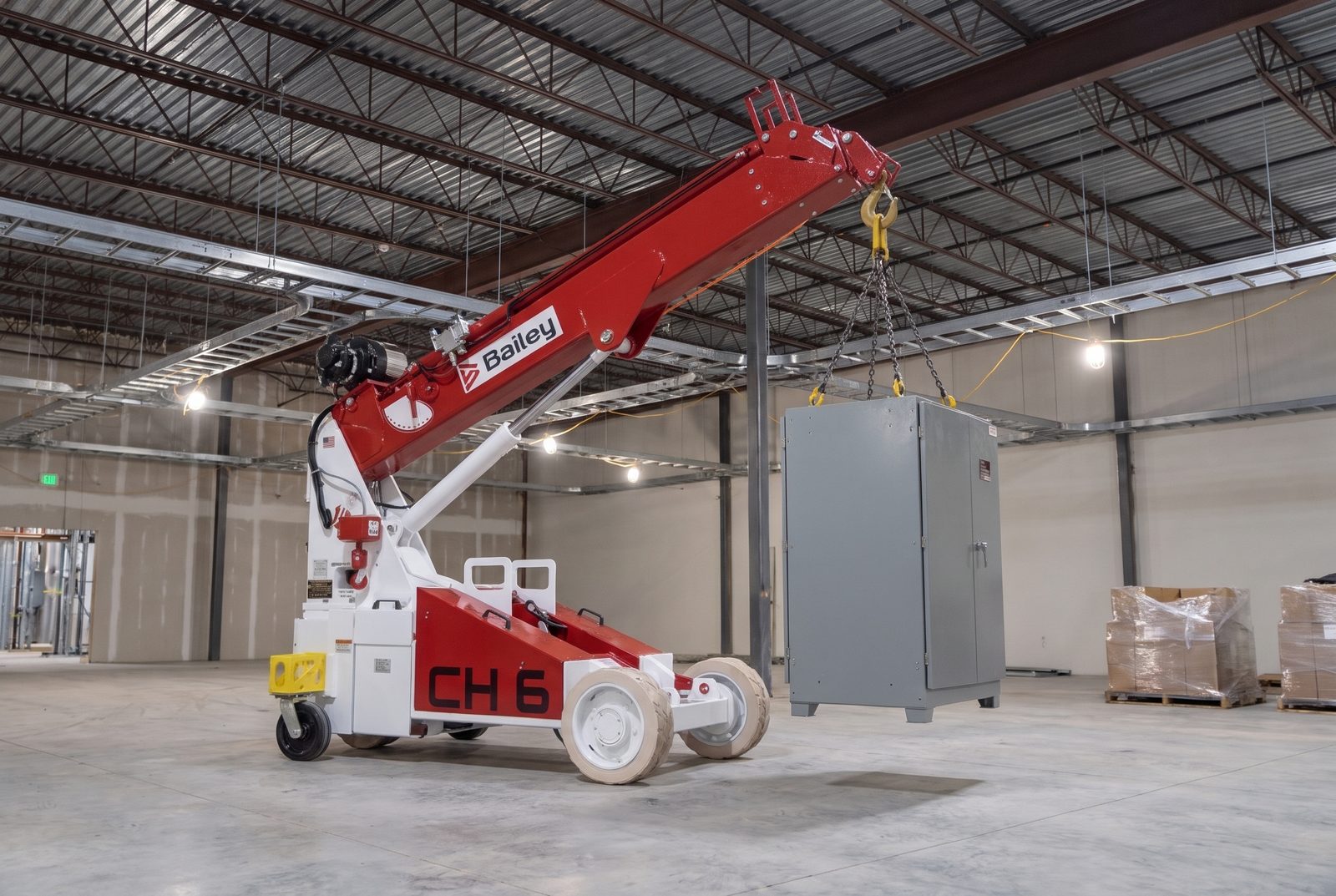
Before they sign for a mini crane, a carry deck or a pick-and-carry crane, most buyers ask the same question: will the people who run it need a crane card? The answer depends on two things OSHA cares about, the kind of work and the machine's rated capacity, plus any license your state or city adds on top.
This guide works through the rules from the regulation text itself: when a compact crane counts as a crane, when the construction standard applies instead of the general industry one, why 2,000 pounds is the number that matters, and what certification involves when you need it. It is written for the safety managers, facility engineers and project managers who buy small cranes and sign off on the people who operate them.
The short version
- In construction, OSHA's crane standard (29 CFR 1926 Subpart CC) covers compact cranes by name: "industrial cranes (such as carry-deck cranes)."
- A crane with a manufacturer-rated capacity of 2,000 lb or less needs a trained operator, not a certified one (1926.1441 and 1926.1427(a)(2)).
- Above 2,000 lb on construction work, the operator must be certified by an accredited testing organization and evaluated by the employer (1926.1427).
- In general industry (plant maintenance, hangar and factory operations), OSHA has no operator certification requirement. The employer still chooses and trains the operator.
- State and city licenses apply on top. New York City has required a hoisting license for mini crane operators since November 7, 2024.
- In construction, a crane rated 2,000 lb or less may not hoist personnel.
The short answer
You need a certified crane operator when the machine is used for construction work and its manufacturer-rated capacity is over 2,000 lb. If the crane is rated 2,000 lb or less, OSHA requires employer training instead of certification. If the work is general industry rather than construction, OSHA has no federal certification requirement at all. In every case, state and city licenses can still apply.
Two questions decide it
Is the work construction?Building, altering or repairing, including installing or upgrading equipment. Replacing a part with an identical one is usually maintenance.
General industry (29 CFR 1910)
No federal certification requirement. The employer designates the operator and trains them on the machine.
The construction crane standard, Subpart CC, applies. Go to question 2.
Is the crane's manufacturer-rated capacity over 2,000 lb?The rating on the machine, not the weight of today's load.
Trained operator (1926.1441)
The employer trains the operator on that type of equipment before use. No third-party certification. No hoisting personnel.
Certified and evaluated (1926.1427)
Certification from an accredited testing organization, plus the employer's documented evaluation on the equipment.
On top of every outcome: state and city operator licenses, your site's or general contractor's rules, and the manufacturer's manual. A forklift or telehandler fitted with a hook or winch to carry a suspended load counts as a crane on construction work.
Is a mini crane a crane to OSHA?
On construction work, yes. Subpart CC applies to "power-operated equipment, when used in construction, that can hoist, lower and horizontally move a suspended load," and its list of covered equipment names "industrial cranes (such as carry-deck cranes)" and "multi-purpose machines when configured to hoist and lower (by means of a winch or hook) and horizontally move a suspended load."
Source: 29 CFR 1926.1400(a)
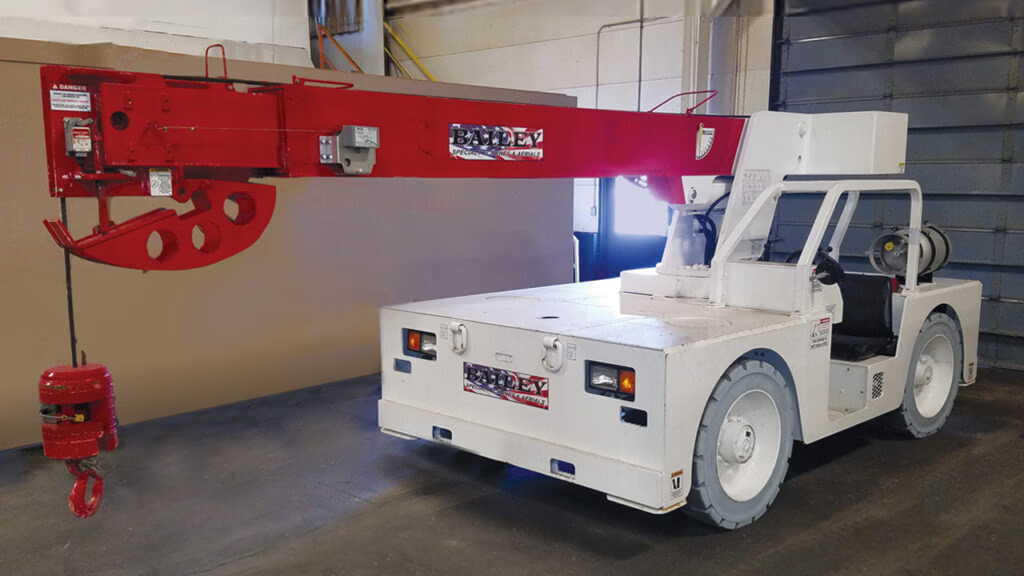
The name on the brochure does not change that. Mini crane, compact crane, pick-and-carry crane, carry deck or compact handler: if the machine can lift a load on a hook and move it, OSHA treats it as a crane when it is used in construction. The scope is written around what the equipment can do, so walk-behind and remote-controlled machines are covered as well as cab-operated ones.
The two questions that matter next are what kind of work the crane is doing and how much it is rated to lift.
Construction or general industry?
This question decides more than any other, and it is about the work, not the building. OSHA defines construction work as "work for construction, alteration, and/or repair, including painting and decorating" (29 CFR 1910.12(b)). Work that is not construction, including routine maintenance and day-to-day operations, falls under the general industry standards in 29 CFR 1910.
OSHA's interpretation letters draw the line between the two with a simple test: replacing something with an identical part is maintenance, while replacing it with "an improved pole or equipment" is construction. The same letter adds that "the scale and complexity of the project are relevant" (OSHA interpretation, November 18, 2003). In practice:
Construction
New data hall
Setting switchgear, PDUs and cooling units in a building that is still being built.
Construction
Plant upgrade
Installing a new production line or replacing equipment with improved equipment in an operating plant.
General industry
Like-for-like repair
Swapping a failed motor or pump for an identical one in a running facility.
General industry
Daily material handling
Moving tooling, parts and components around a factory floor or MRO hangar as part of normal operations.
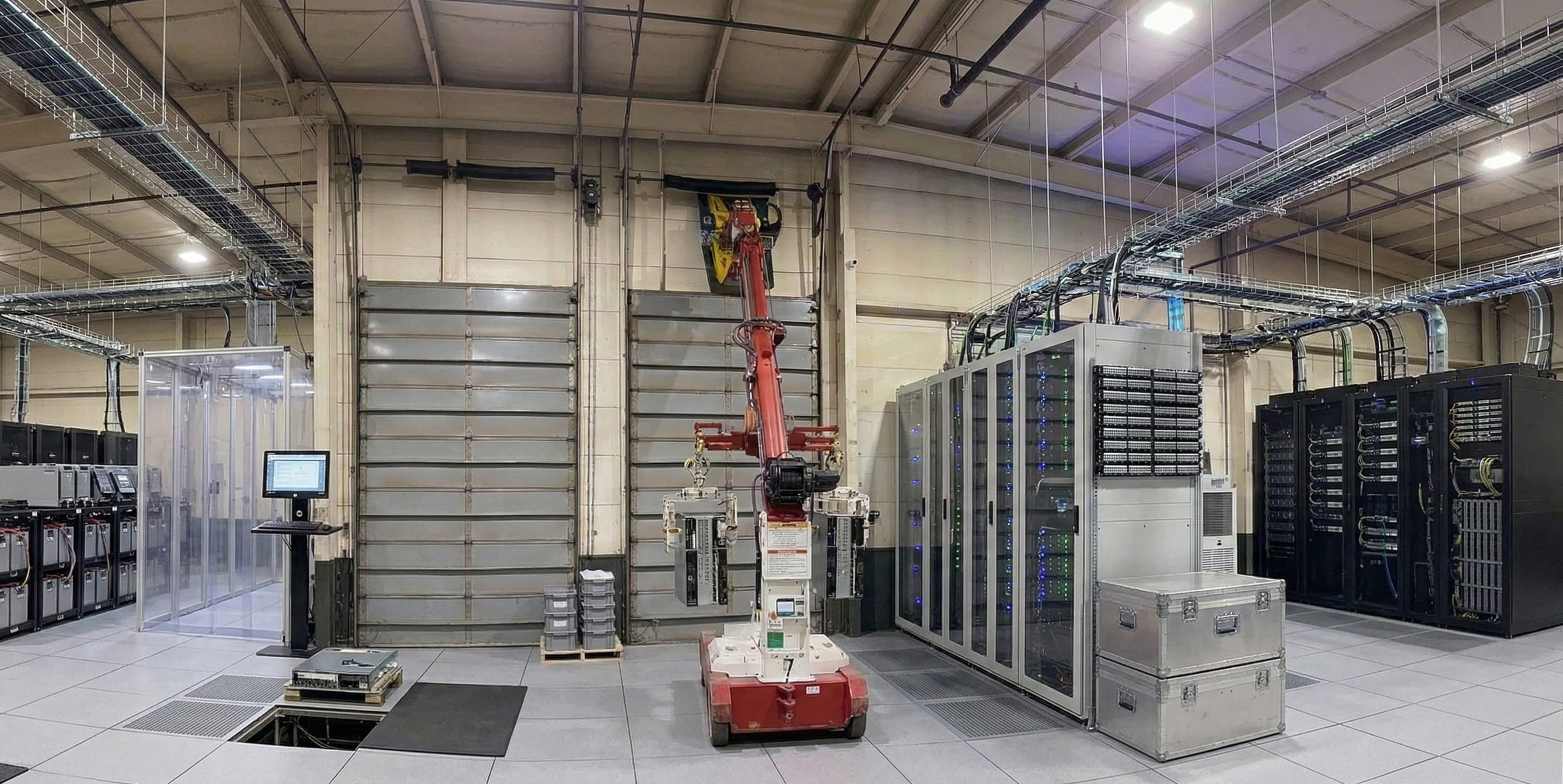
The same building can host both. A semiconductor fab or data center can have a construction project in one hall and maintenance crews in the next, and the same compact crane can move between them. When a machine will see both kinds of work, plan the operator program for the stricter one.
The 2,000 lb line
Operators of "equipment with a maximum manufacturer-rated hoisting/lifting capacity of 2,000 pounds or less" are not required to comply with OSHA's certification section, 1926.1427. Those cranes fall under 1926.1441 instead, which says: "The employer must train each operator, prior to operating the equipment, on the safe operation of the type of equipment the operator will be using."
Sources: 29 CFR 1926.1427(a)(2); 29 CFR 1926.1441(e)
Three details trip people up:
- It is the rating, not the load. The threshold is the machine's maximum manufacturer-rated capacity. A 4,000 lb machine that only ever lifts 1,500 lb loads is still above the line.
- Training is still required. Section 1441 swaps third-party certification for employer training on the type of equipment, before the operator runs it. OSHA's text does not prescribe a format, but a written record of who was trained, on what and when is the first thing a site safety manager will ask for.
- No personnel. "The employer must ensure that equipment covered by this section is not used to hoist personnel" (1926.1441(j)). If people need to work at height, use equipment built for it, such as a MEWP.
Section 1441 is a lighter rule set written for small cranes, but it is still a rule set. Training is one requirement among several.
Above 2,000 lb: certification plus evaluation
On construction work, a crane rated over 2,000 lb needs an operator who meets two separate requirements.
1. Certification
The operator must be certified by an accredited testing organization, which must "provide certification based on equipment type, or type and capacity" (1926.1427(d)(1)(ii)(B)). Since OSHA's 2018 final rule, the certification does not have to match the crane's capacity: OSHA removed "a provision that required different levels of certification based on the rated lifting capacity of equipment," although testing organizations may still issue capacity-specific cards (83 FR 56198). That rule took effect December 10, 2018.
2. Employer evaluation
A card alone does not qualify anyone. "Possession of a certificate or degree cannot, by itself, cause a person to be qualified" (1926.1427(f)(3)). The employer has to evaluate the operator and "document the completion of the evaluation," including "the make, model, and configuration of equipment used in the evaluation" (1926.1427(f)(6)). The evaluation requirement took effect February 7, 2019.
Certification says an operator knows how to run this type of crane. The employer's evaluation says they can run this machine, in this configuration, on this job. On construction work over 2,000 lb, OSHA requires both.
Which certification covers a carry deck or pick-and-carry crane?
Two accredited programs name carry deck cranes directly:
| Program | Certification | What it covers |
|---|---|---|
| NCCCO | Telescopic Boom Crane, Fixed Cab (TSS) | "Cranes having a fixed (non-rotating) operator's station." The NCCCO candidate handbook lists carry deck cranes as an example. |
| NCCER | Industrial/Carry Deck Crane | ANAB-accredited and aligned with 29 CFR 1926 Subpart CC. Written and practical exams. |
Sources: NCCCO Mobile Crane Operator Candidate Handbook (rev. 01/24); NCCER Industrial/Carry Deck Crane specifications (October 2025).
Carry deck certifications were written with ride-on machines in mind; NCCER's exam, for example, uses load charts from two ride-on carry deck cranes. Many compact pick-and-carry cranes are walk-behind or remote-controlled instead. OSHA's rule covers that gap: if no accredited test exists for a type of equipment, an operator certified "for the type that is most similar to that equipment" is treated as compliant (1926.1427(d)(2)). Before you schedule a practical exam, ask the testing organization which certification it treats as the closest match for your machine, and get the answer in writing.
General industry: designated and trained
Outside construction, the answer is simpler. In a 2012 letter, OSHA said a company not engaged in construction "must instead follow rules applicable to general industry. The general industry rules do not require operator certification (see 29 CFR 1910.180)" (OSHA interpretation, October 3, 2012).
The general industry crane section, 1910.180, covers "wheel mounted cranes of both truck and self-propelled wheel type" that are "powered by internal combustion engines or electric motors and which utilize drums and ropes." Where it applies, "only designated personnel shall be permitted to operate" the crane, meaning people "selected or assigned by the employer" as qualified.
Whether 1910.180 covers a particular compact crane depends on how it lifts: the section is written for cranes with drums and ropes, and many compact handlers lift on a fixed hook at the boom tip unless a winch is fitted. Either way, the practical answer is the same. The employer picks the operator, trains them on the machine using the manufacturer's manual, and keeps the record. Your insurer, your corporate safety program or a general contractor on site may ask for more than OSHA does.
Forklifts and telehandlers with a hook
The crane standard excludes "powered industrial trucks (forklifts), except when configured to hoist and lower (by means of a winch or hook) and horizontally move a suspended load" (1926.1400(c)(8)). On construction work, a forklift or telehandler that hangs a load from a hook or winch is a crane for that lift, and the crane rules for its operator apply.
Forklift operator rules are different. Under 1910.178(l), the employer must show each operator is competent through training and evaluation, and "an evaluation of each powered industrial truck operator's performance shall be conducted at least once every three years." A forklift card does not cover a suspended-load lift, and a crane certification does not cover a forklift. If one person will run both, plan for both.
State and city licenses
OSHA's rule defers to local licensing: the license requirements apply "when a state or local government issues operator licenses for equipment covered under subpart CC" (1926.1427(c)(1)). Several states and cities license crane operators, and their rules and thresholds differ. Check with your state labor or licensing agency before the machine arrives.
New York City is the clearest example for compact cranes. "Beginning November 7, 2024, to operate an articulating boom crane, mini crane, or rotating telehandler, the operator must be licensed as a New York City Hoisting Machine Operator (HMO)." The city defines a mini crane as "a mobile crane, other than a boom truck, which possesses a telescoping, articulating, hydraulic, or folding boom, whose boom, including jibs and any other extensions to the boom, does not exceed 50 feet in length, and whose manufacturer's rated capacity does not exceed 3 tons" (NYC Department of Buildings). The license calls for an NCCCO Telescopic Boom Crane (Fixed Cab) certification or an NCCER certification that authorizes operation of a telescopic boom crane.
By that definition, most compact cranes rated at 6,000 lb or less, with booms well under 50 feet, count as mini cranes in New York City. Confirm the current license and permit requirements with the Department of Buildings for your project.
What OSHA may change next
OSHA's regulatory agenda carries a proposed rule titled "Amendments to the Cranes and Derricks in Construction Standard" (RIN 1218-AC81). Its latest entry lists a proposal for November 2026 and says the change would "narrow the scope for forklifts carrying loads under the forks to cover forklifts fitted with a 'winch and boom'" (reginfo.gov). The item has been on the agenda since 2013 and its target date has slipped before, and the published summary does not mention the 2,000 lb section. Until a final rule appears in the Federal Register, the current text is what applies.
Where Bailey's compact handlers fall
Bailey's Compact Handler line spans the 2,000 lb line. Here is where each model sits on construction work:
| Model | Rated hook capacity | vs. 2,000 lb | Construction operator rule |
|---|---|---|---|
| CH Compact Handler | 700 lb | At or under | Employer-trained operator (1926.1441) |
| The Junior | 1,950 lb | At or under | Employer-trained operator (1926.1441) |
| CH 4 OMNI | 4,000 lb | Over | Certified and evaluated operator (1926.1427) |
| CH TRAX | 5,000 lb | Over | Certified and evaluated operator (1926.1427) |
| CH 6 | 6,000 lb | Over | Certified and evaluated operator (1926.1427) |
Capacities are the maximum hook capacities listed on each model's product page. Attachments and configuration affect what the machine is rated to lift, so check the load chart for your configuration. In general industry, none of these models requires a federally certified operator; the employer designates and trains the operator.
That spread gives buyers a real choice. A maintenance or facilities team that wants trained in-house staff to run the machine on construction jobs, without third-party certification, can stay at or under 2,000 lb with the CH Compact Handler or The Junior. Work that needs more, like setting switchgear and UPS units in a data hall, calls for the CH 4 OMNI, CH TRAX or CH 6 and a certified, evaluated operator. Size the machine to the heaviest lift first, then plan the operator program around it.
A checklist before you buy
Answer these before you order
- The work: will the machine be used on construction, maintenance, routine operations, or a mix? Plan for the strictest one.
- The heaviest lift: does your heaviest load, at the reach you need, require more than 2,000 lb of rated capacity?
- People at height: will anyone need to work from the machine? If so, plan for personnel hoisting rules or a MEWP, not a small crane.
- The operators: who will run it? Do they hold a certification the testing organization treats as covering this type of machine?
- Local licenses: does your state or city license crane operators? In New York City, mini cranes need an HMO license.
- Records: how will you document training and, above 2,000 lb, each operator's evaluation by make, model and configuration?
- Site rules: will a general contractor, owner or insurer require more than OSHA does?
If you are deciding between models, talk to Bailey's team about your heaviest lift, your reach and your floor. We will help you pick the capacity that fits the job and the operator program that fits your crew. For indoor jobs, our guide to getting a crane inside your building covers doorways, floor loading and the spec sheet to send your supplier.
FAQ
Do you need a license to operate a mini crane?
There is no federal license. On construction work, OSHA requires a certified and employer-evaluated operator for cranes rated over 2,000 lb, and employer training for cranes rated 2,000 lb or less. In general industry, OSHA has no certification requirement. Some states and cities add their own license: New York City has required a Hoisting Machine Operator license for mini crane operators since November 7, 2024.
Do you need to be certified to operate a carry deck crane?
On construction work, yes, if the carry deck's manufacturer-rated capacity is over 2,000 lb. OSHA's crane standard names carry deck cranes among the equipment it covers, and 29 CFR 1926.1427 requires certification by an accredited testing organization plus the employer's documented evaluation. At 2,000 lb or less, employer training replaces certification. In general industry, OSHA does not require certification.
Is a carry deck crane considered a crane by OSHA?
Yes, on construction work. 29 CFR 1926.1400(a) lists "industrial cranes (such as carry-deck cranes)" among the equipment covered by the Cranes and Derricks in Construction standard.
What is OSHA's 2,000 lb crane rule?
Under 29 CFR 1926.1427(a)(2), operators of equipment with a maximum manufacturer-rated hoisting/lifting capacity of 2,000 pounds or less do not need crane operator certification. Those cranes fall under 29 CFR 1926.1441, which requires the employer to train each operator on the type of equipment before use and prohibits using the equipment to hoist personnel.
Does a pick-and-carry crane need a certified operator?
It follows the same rules as any crane. On construction work, a pick-and-carry crane rated over 2,000 lb needs a certified and evaluated operator; one rated 2,000 lb or less needs an employer-trained operator. In general industry, OSHA requires the employer to designate and train the operator but does not require certification.
Does OSHA require crane operator certification in general industry?
No. OSHA has stated that the general industry rules do not require operator certification. Where 29 CFR 1910.180 applies, only designated personnel, selected by the employer as qualified, may operate the crane. State or city licenses, site rules or an insurer can still require more.
Which certification covers carry deck cranes?
Two accredited programs name them: the NCCCO Telescopic Boom Crane, Fixed Cab (TSS) certification, whose candidate handbook lists carry deck cranes as an example, and the NCCER Industrial/Carry Deck Crane certification. If no accredited test exists for your exact type of machine, OSHA treats certification for the most similar type as compliant.
Is a crane operator certification enough to run any crane?
No. On construction work, OSHA says possession of a certificate cannot by itself make a person qualified. The employer must also evaluate the operator and document the evaluation, including the make, model and configuration of the equipment used.
Can a small crane be used to lift people?
Not on construction work if it is rated 2,000 lb or less: 29 CFR 1926.1441(j) prohibits using that equipment to hoist personnel. Larger cranes may hoist personnel only under the conditions in 29 CFR 1926.1431. For routine work at height, use a mobile elevating work platform.
Is a forklift with a hook considered a crane?
On construction work, yes, when it is configured to hoist and lower a suspended load with a winch or hook and move it horizontally. 29 CFR 1926.1400(c)(8) excludes forklifts from the crane standard except in that configuration.
Does New York City require a license for mini cranes?
Yes. Since November 7, 2024, mini crane operators in New York City must hold a Hoisting Machine Operator license. The city defines a mini crane as a mobile crane, other than a boom truck, with a boom of 50 feet or less including extensions and a manufacturer's rated capacity of 3 tons or less.
Which Bailey compact handlers are rated 2,000 lb or less?
The CH Compact Handler (700 lb) and The Junior (1,950 lb). On construction work they need employer-trained operators rather than certified ones. The CH 4 OMNI (4,000 lb), CH TRAX (5,000 lb) and CH 6 (6,000 lb) are rated over 2,000 lb, so construction use calls for a certified and evaluated operator.
Sources
- 29 CFR 1926.1400, Scope
- 29 CFR 1926.1427, Operator training, certification, and evaluation
- 29 CFR 1926.1441, Equipment with a rated hoisting/lifting capacity of 2,000 pounds or less
- 29 CFR 1910.12, Construction work
- 29 CFR 1910.180, Crawler locomotive and truck cranes
- 29 CFR 1910.178, Powered industrial trucks
- 83 FR 56198 (November 9, 2018), Cranes and Derricks in Construction: Operator Qualification
- OSHA interpretation letter, November 18, 2003 (maintenance vs. construction)
- OSHA interpretation letter, October 3, 2012 (general industry)
- Regulatory agenda, RIN 1218-AC81
- NYC Department of Buildings, HMO licensing FAQs
- NCCER Industrial/Carry Deck Crane specifications
- NCCCO Mobile Crane Operator Candidate Handbook