




What Is a Pick-and-Carry Crane? A Complete Industrial Buyer's Guide
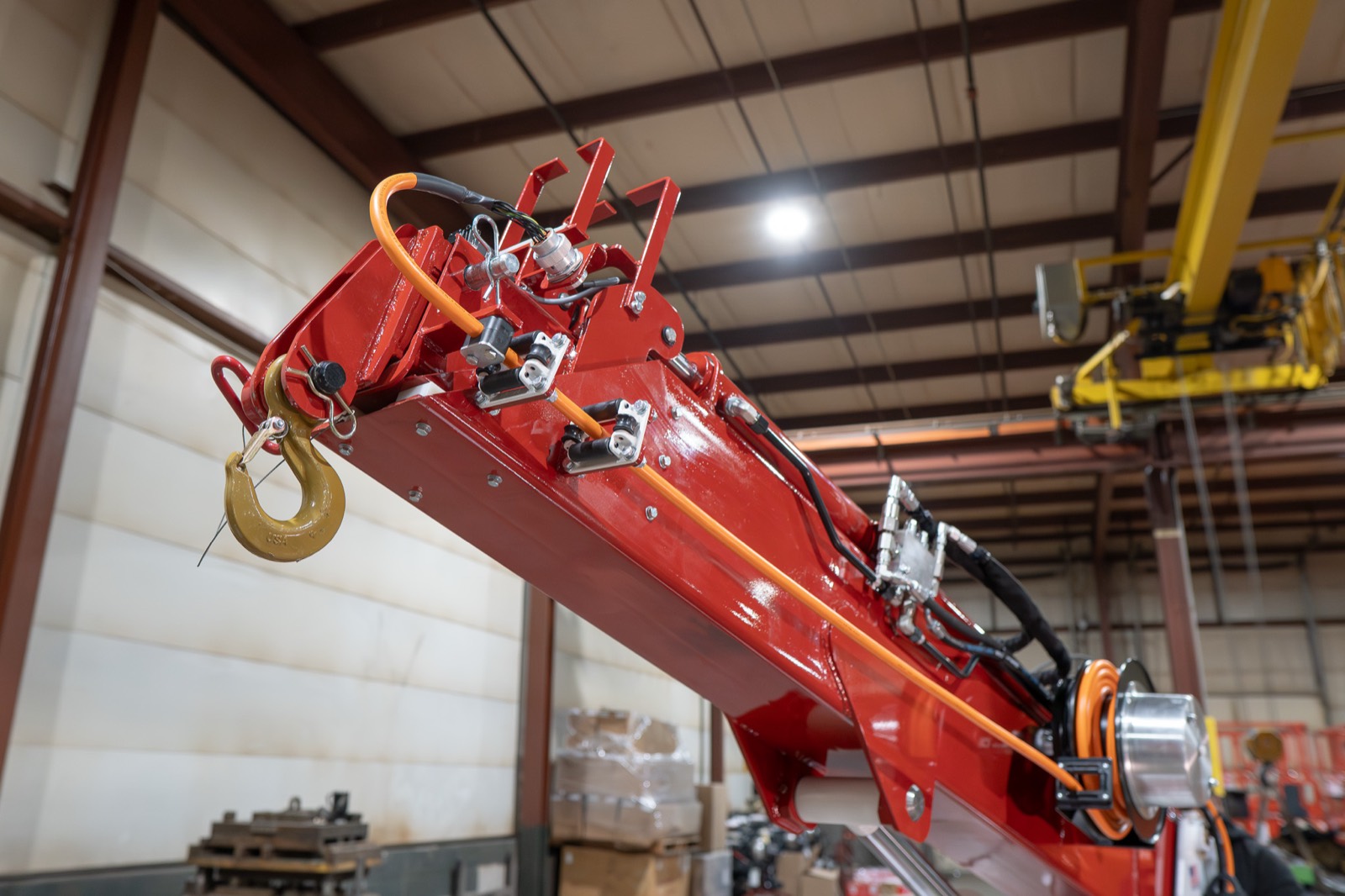
If you've searched for a pick-and-carry crane, a walk-behind crane, or a mobile pick-and-carry crane, you've run into a category that quietly does something most cranes can't: it lifts a load and then drives across the floor with that load still suspended. No setting down, no re-rigging, no resetting outriggers between moves. That single capability is why pick-and-carry cranes have become the default tool for moving heavy, awkward loads through fabrication shops, warehouses, precast yards, aerospace hangars, and finished indoor facilities.
This guide explains exactly what a pick-and-carry crane is, how it differs from a conventional mobile crane, how to read its load chart — the part that trips up most first-time buyers — where these machines earn their keep, and how to specify the right one. We design and build compact pick-and-carry cranes at Bailey Cranes, and choosing the wrong on-rubber rating is the most common (and most expensive) specification mistake we see.
What Is a Pick-and-Carry Crane?
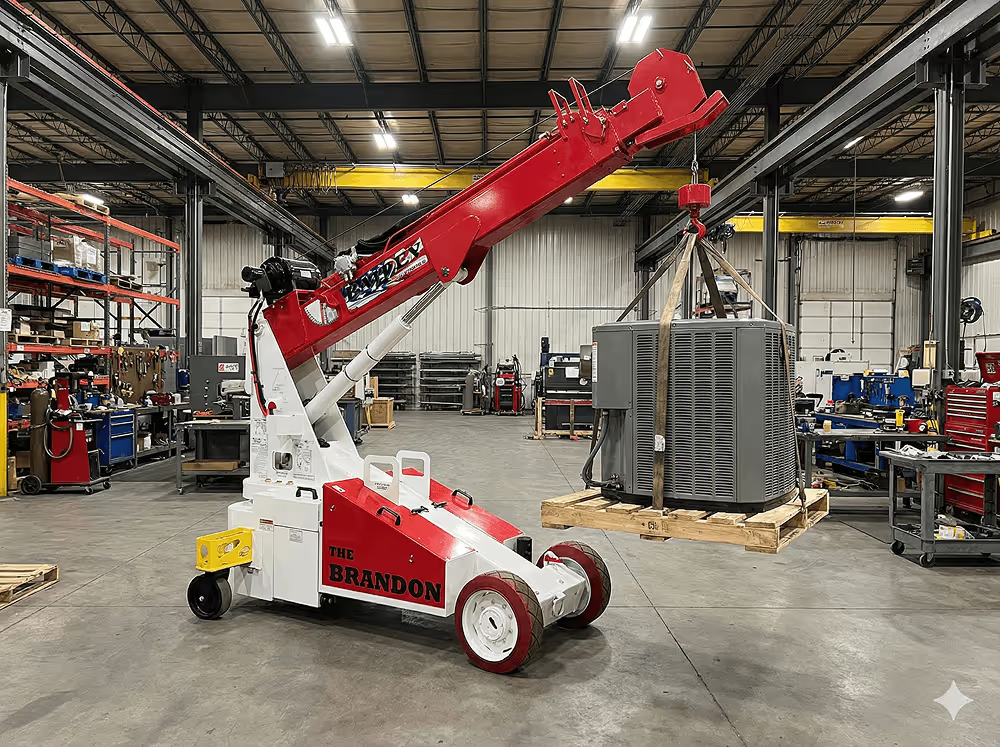
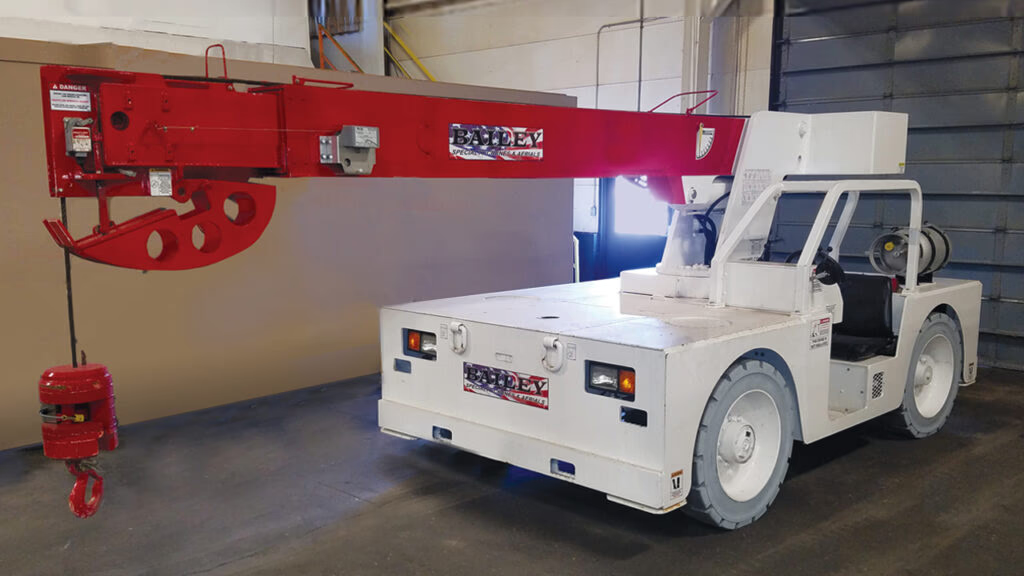
A pick-and-carry crane is a self-propelled mobile crane built to lift a load and travel with it suspended, lifting on its tires or tracks instead of deployed outriggers. It picks the load, carries it under its own power, and places it at the destination — collapsing the set-down, reposition, and re-rig cycle into a single continuous move.
The defining trait is travel under load. A tower crane and a truck-mounted mobile crane both lift from a fixed footprint; to move a load any real horizontal distance, they set it down or hand it off. A pick-and-carry crane simply walks it there. Most compact pick-and-carry cranes used indoors are rated between 1,000 and 6,000 lbs, with footprints narrow enough to pass through a standard 36-inch doorway.
In short: a pick-and-carry crane is a mobile crane rated to drive while carrying a suspended load — trading maximum lifting capacity for the ability to move loads quickly through tight, indoor, and congested spaces.
How a Pick-and-Carry Crane Works
Every pick-and-carry lift is the same two-part cycle: lift, then travel. The crane rigs and hoists the load like any other crane, but instead of swinging it to a drop zone within a fixed radius, it keeps the load low and drives the whole machine — load included — to the placement point. The boom does the fine positioning; the drive system does the transport.
Lifting on Rubber, Not Outriggers
Conventional cranes borrow most of their capacity from outriggers that widen the machine's stability footprint. Pick-and-carry cranes lift "on rubber" (or on tracks) so they stay narrow and ready to move. That stability comes from a low center of gravity, counterweight, and a tight load radius rather than from outstretched legs — which is why these machines are compact but rated more conservatively than an outrigger-supported crane of similar size.
Operator Modes: Walk-Behind vs. Ride-On
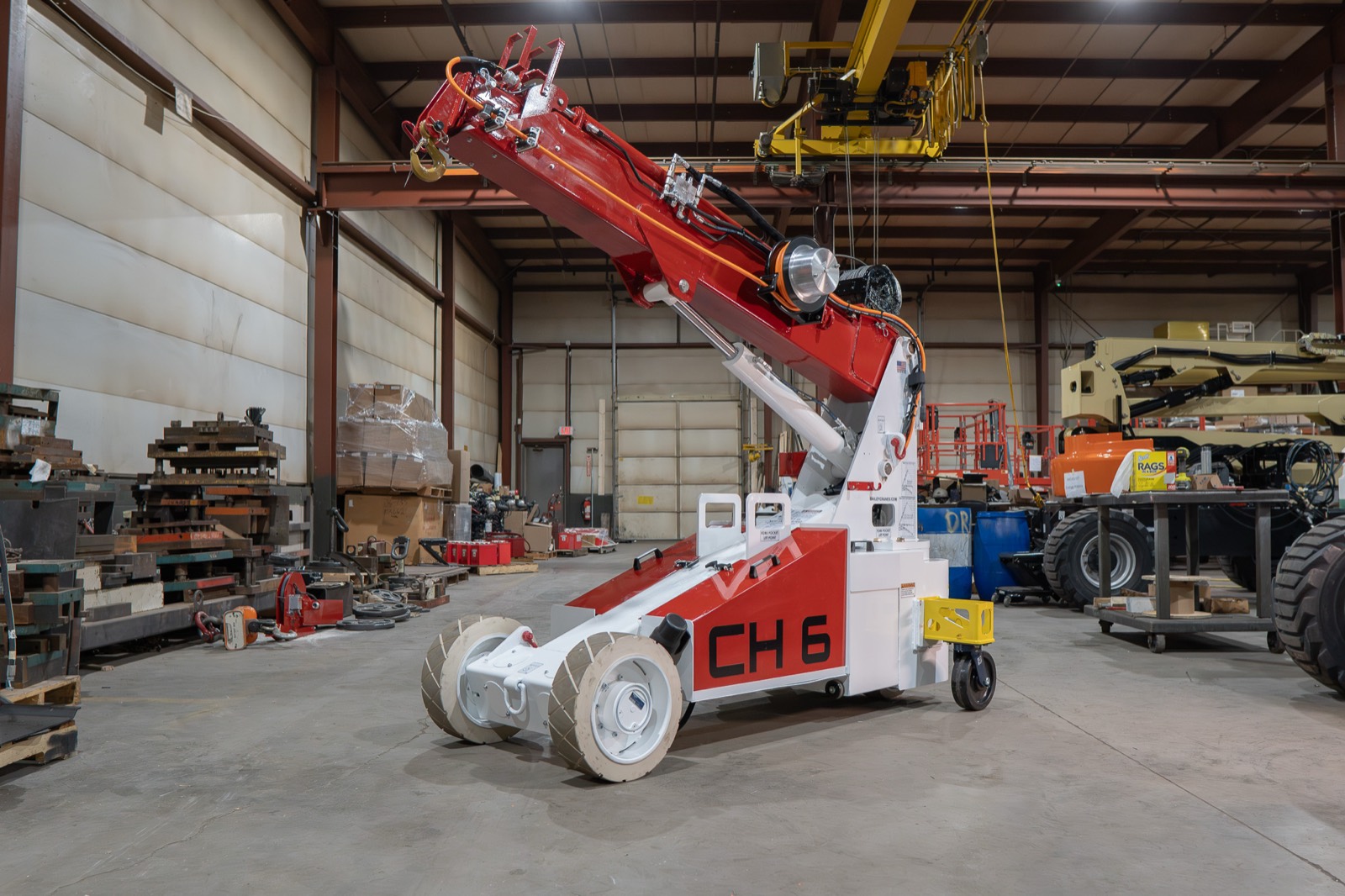
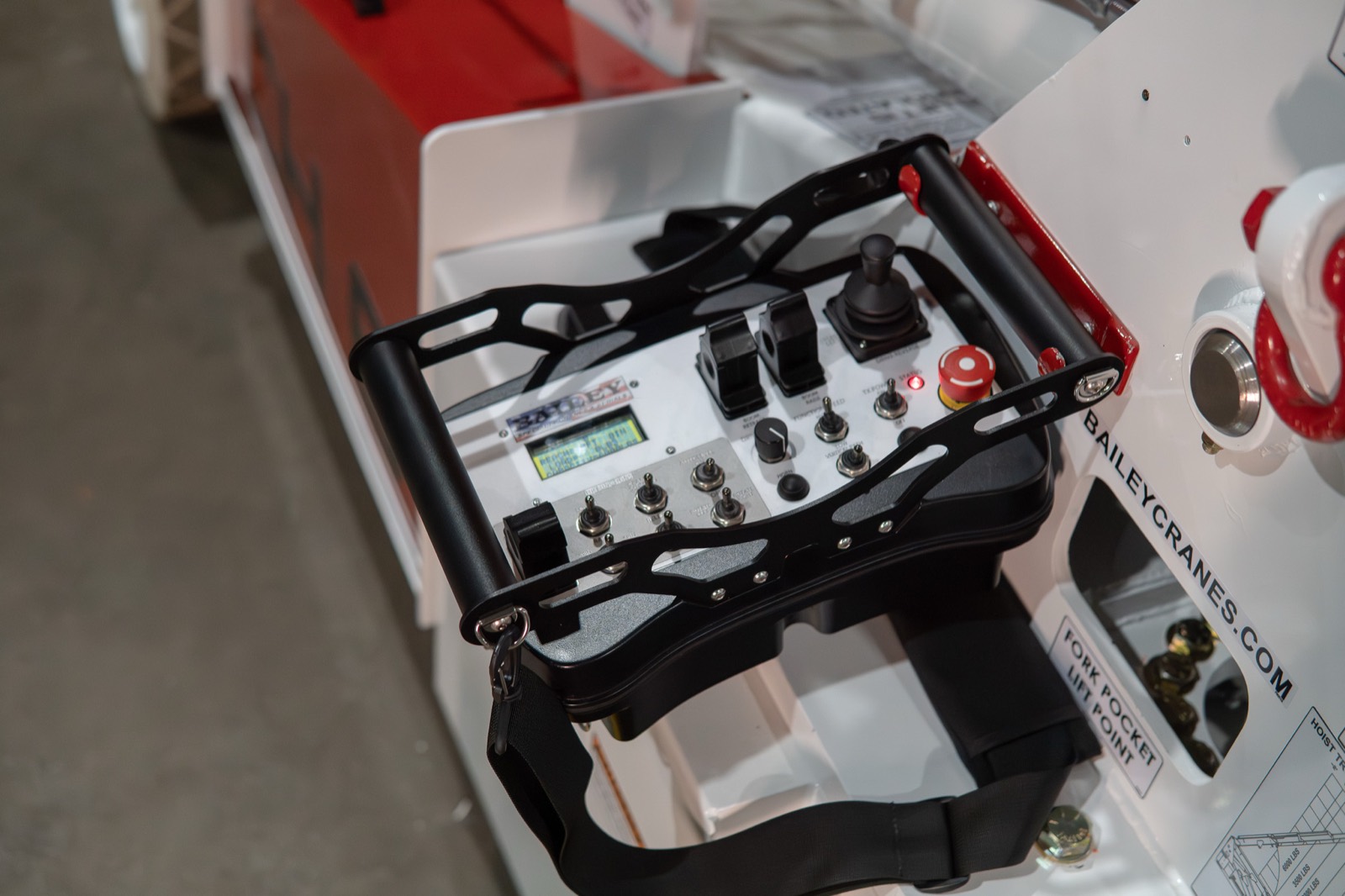
Compact pick-and-carry cranes come in two control styles. A walk-behind crane is pedestrian-operated: the operator walks alongside the machine and controls lift, swing, and travel from a handheld pendant, keeping eyes on the load and the floor at all times. This is the most common configuration for glazing, signage, HVAC, and museum-grade handling where precision near the load matters more than travel speed. Ride-on models let the operator sit and travel faster between lifts, and are favored when loads move longer distances across a large floor.
Steering and Maneuverability
The tightest spaces demand more than a small footprint — they demand the ability to turn in place and crab sideways. Omni-directional steering, available on models like Bailey's Brandon 10 Omni, lets the machine move in any direction without a three-point turn, which is what makes a pick-and-carry crane usable in a packed fab shop or a finished interior.
Pick-and-Carry Crane vs. Conventional Mobile Crane
The two are built for opposite priorities. A conventional mobile crane maximizes lift height and capacity from a fixed, outrigger-supported position. A pick-and-carry crane maximizes mobility and the ability to relocate a suspended load. Here's how they compare:
- Setup. Mobile crane: deploy outriggers, level, and rig before each lift zone. Pick-and-carry crane: lift on tires or tracks and go — minimal setup between moves.
- Moving the load. Mobile crane: set down, relocate, re-rig. Pick-and-carry crane: travel with the load suspended.
- Footprint. Mobile crane: large, with an outrigger spread. Pick-and-carry crane: narrow enough for doorways and aisles.
- Capacity. Mobile crane: high, supported by outriggers. Pick-and-carry crane: lower, rated for on-rubber travel.
- Best fit. Mobile crane: heavy outdoor lifts from a single position. Pick-and-carry crane: moving loads horizontally through confined, indoor, or congested spaces.
Neither is "better" — they solve different problems. If your work is about access and transport rather than maximum reach, the pick-and-carry crane is the right category. For a wider view of the compact-crane landscape, see our complete guide to small mobile cranes, and for the road-legal cousin of this category, our guide to the carry deck crane.
Reading the Load Chart: Why Capacity Drops When You Carry
This is the section to read twice. The number on the spec sheet — say, 6,000 lbs — is the capacity at the boom foot, in the most favorable configuration. The number that actually governs your lift is whatever the load chart shows at your real reach, articulation, and travel condition. Three factors pull that figure down:
- Reach. As the boom extends, leverage works against the machine. A crane rated at 6,000 lbs close in can derate to a fraction of that at full extension.
- Articulation. Swinging the load out to the side, away from the machine's centerline, reduces rated capacity further.
- On-rubber travel. The capacity at which a pick-and-carry crane may travel with a suspended load is lower than its static, stationary rating. This "on-rubber" or "pick-and-carry" rating is the one that matters when the machine is moving.
The takeaway for buyers: never spec a pick-and-carry crane by its headline maximum. Spec it by the load-chart capacity at the reach, articulation, and travel condition you will actually use. A machine that's "6,000 lbs" on paper but 1,800 lbs on-rubber at your working reach is an 1,800-lb crane for your job.
Where Pick-and-Carry Cranes Earn Their Keep
Pick-and-carry cranes solve the problem of moving a load through a space that a full-size crane can't enter, can't be permitted in, or can't operate in without shutting down the work around it.
Fabrication Shops and Precast Plants
Steel fabrication, weldments, precast panels, and molds need to move continuously between stations. A pick-and-carry crane shuttles them across the floor without tying up an overhead bridge crane or staging a mobile crane for every move.
Warehousing and Material Handling
When loads are too heavy or awkward for a forklift but need to travel horizontally, a compact pick-and-carry crane bridges the gap — placing dies, machine tooling, and oversized components precisely where a forklift can't reach.
Aerospace MRO and Defense Maintenance
Hangars and overhaul bays require equipment that fits under wings and between bulkheads while carrying fuselage sections, engine pods, and avionics modules to the work. Compact pick-and-carry cranes with custom attachments do this without the staging time a conventional crane needs.
Glass and Glazing Installation
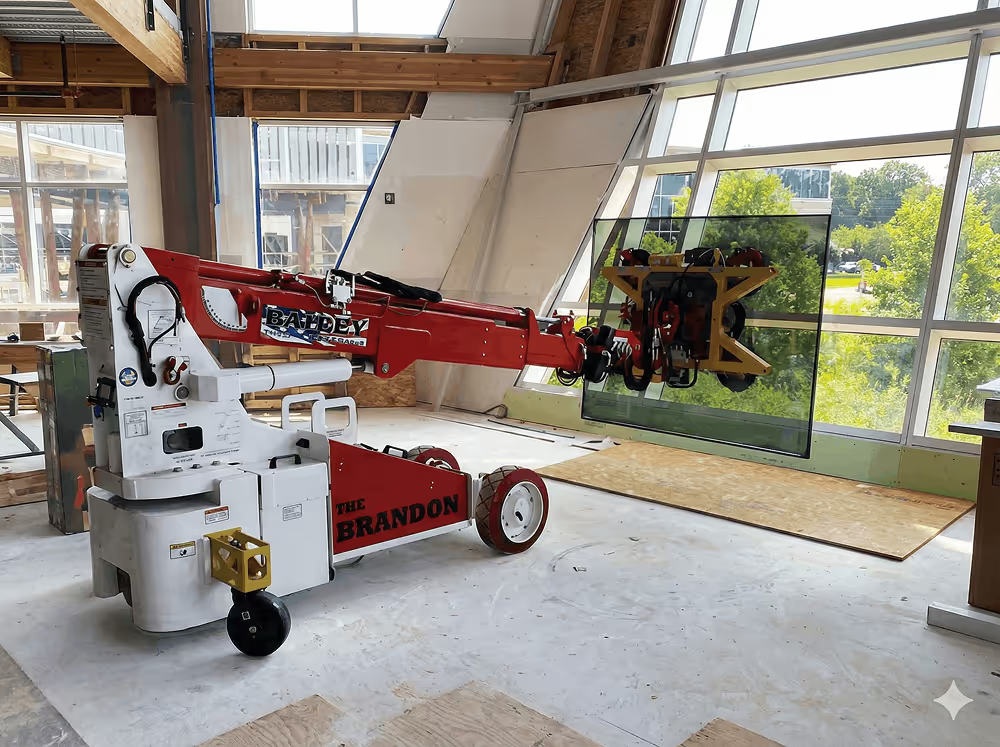
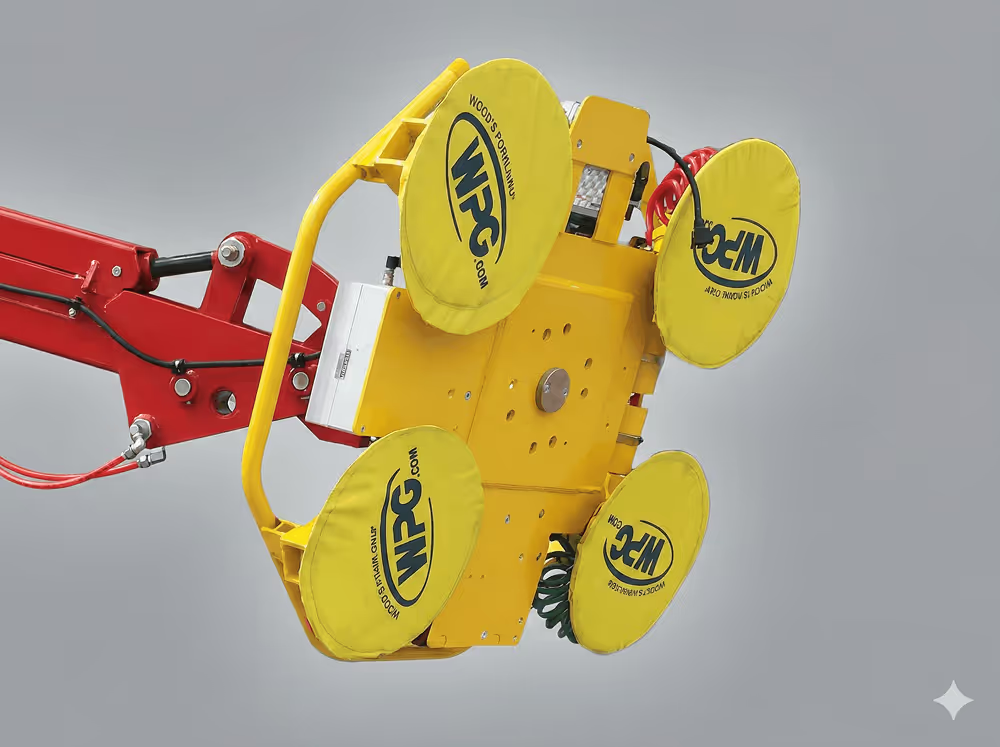
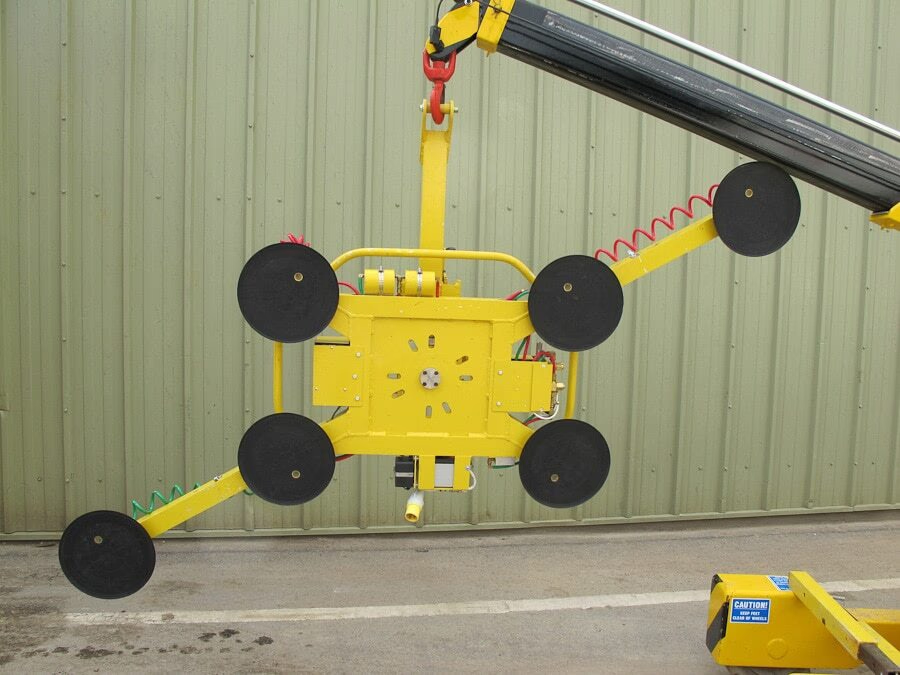
Glass is heavy, awkward, and unforgiving — a single dropped lite costs thousands. Pick-and-carry glass lifting equipment combines vacuum cups, multi-axis articulation, and walk-behind precision to carry panels to the facade and set them with millimeter control.
Cleanroom, Semiconductor, and Data Center Work
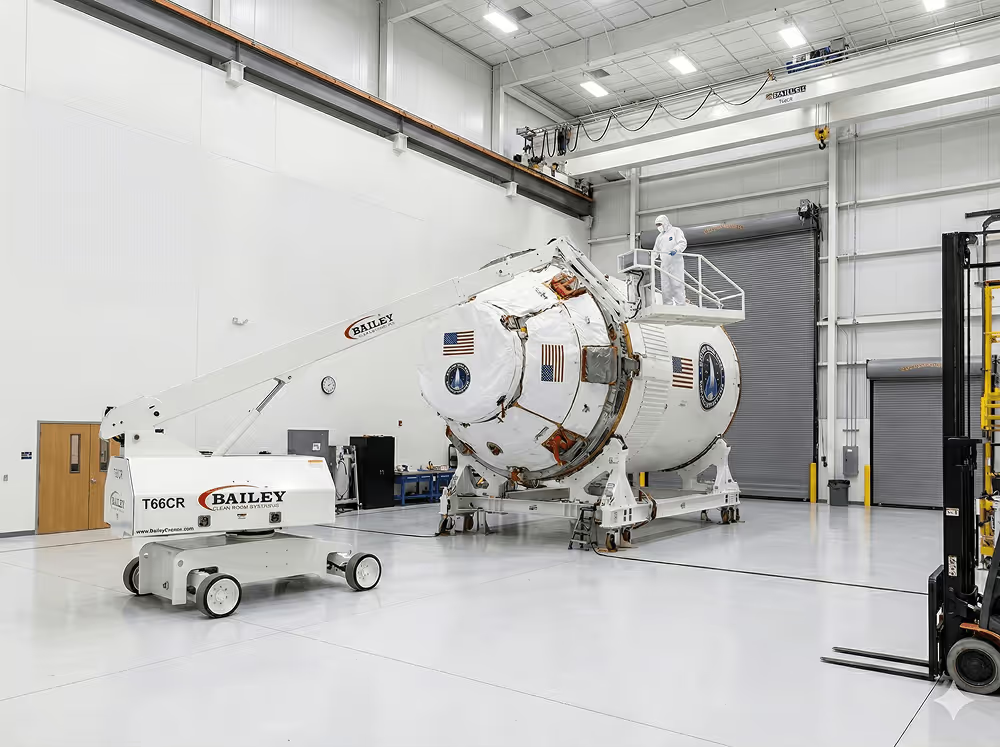
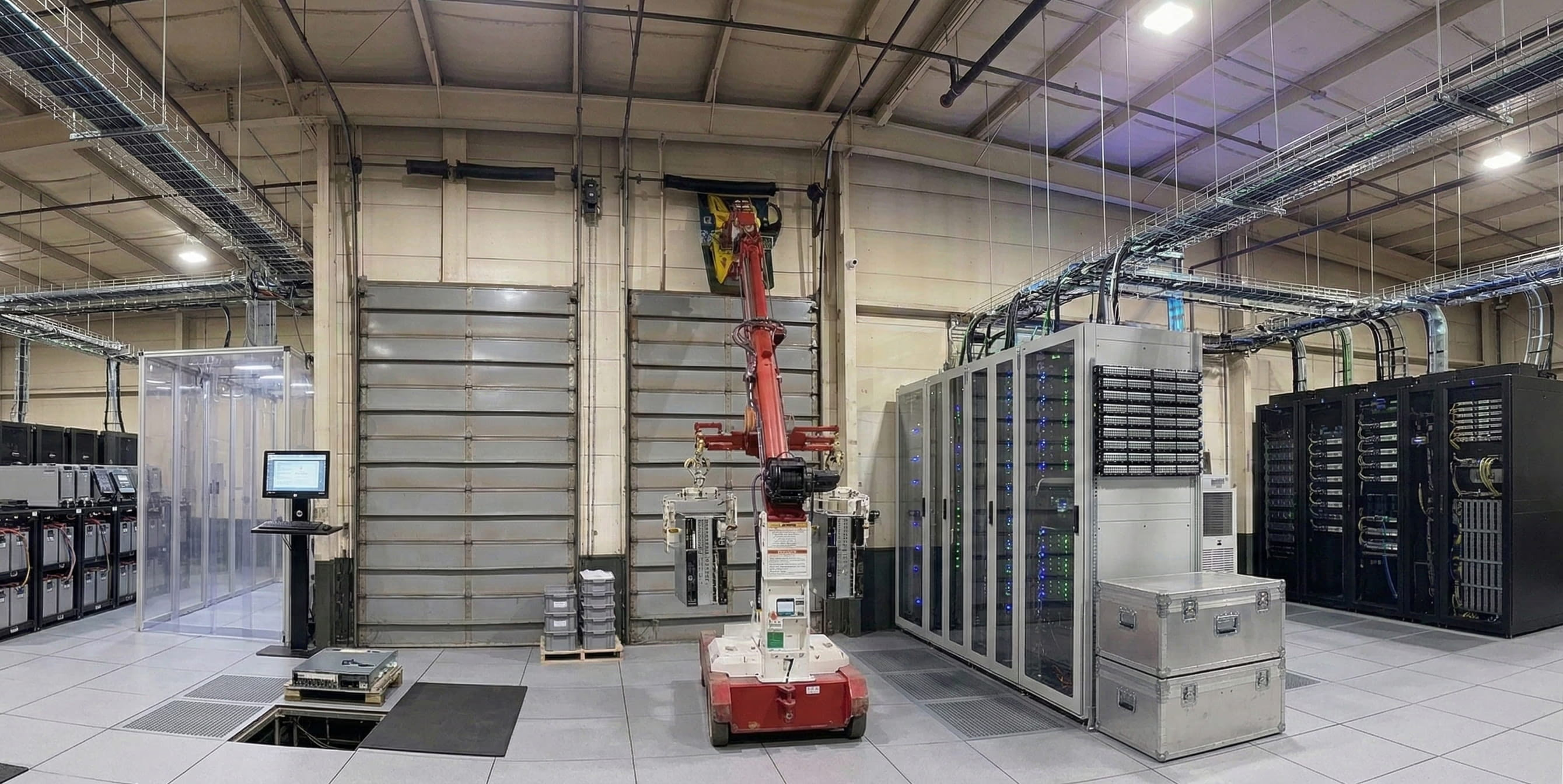
Fabs, pharma cleanrooms, and data halls can't tolerate exhaust, hydraulic-oil leaks, or marking tires. Electric pick-and-carry cranes with clean-grade tires and sealed drives carry tools and equipment through these environments while meeting their contamination protocols — see our clean room man lifts for environment-specific configurations.
How to Choose a Pick-and-Carry Crane
Specifying a pick-and-carry crane is a load-chart exercise, not a catalog exercise. Six criteria decide whether the machine performs on your floor or sits unused:
1. On-Rubber Capacity at Working Reach
Start here. Find the load-chart capacity for traveling with the load at your actual reach and articulation — not the boom-foot maximum. This single number determines whether the crane can do your job.
2. Footprint and Doorway Clearance
Measure your narrowest access point — usually a 36-inch single doorway (about 32 inches clear). Bailey's Brandon platform is 34½ inches wide and passes through standard doors without removing the frame. A machine that must be disassembled to enter the building doubles your operating cost.
3. Power Source: Electric vs. Internal Combustion
Electric pick-and-carry cranes are mandatory indoors, in cleanrooms, and in emission-restricted facilities — and they're quieter, faster to deploy, and have fewer service points. Diesel and propane remain relevant outdoors where battery runtime is the constraint.
4. Operator Mode
Walk-behind control gives maximum precision next to the load; ride-on speeds up long moves. Match the mode to how far and how precisely your loads travel.
5. Steering and Surface Conditions
Omni-directional steering is worth it in genuinely tight spaces. Confirm the tire or track type against your floor — a wheeled crane on a raised access floor needs floor-loading verification; tracks can mar a finished epoxy surface.
6. Attachment Ecosystem
A pick-and-carry crane that does one job rarely earns its keep. Verify the available attachments — vacuum lifters, fork carriages, rotators, basket and flipper attachments — so one chassis covers multiple missions.
Safety: Traveling With a Suspended Load
Travel under load is the defining capability of a pick-and-carry crane — and the discipline that keeps it safe. Within the machine's rated limits, the practices below are standard:
- Stay on the on-rubber rating. Never exceed the load-chart capacity for traveling, which is lower than the stationary rating.
- Keep the load low and close. Minimize boom extension and articulation while moving; carry the load near the ground and near the machine's centerline.
- Travel slowly on rated, level surfaces. Pick-and-carry ratings assume firm, level ground. Slopes, soft floors, and uneven surfaces require derating or are off-limits.
- Watch the path. Walk-behind operation exists so the operator can see the load and the travel route at once — use that line of sight.
- Verify floor loading. Indoors, confirm the combined machine-plus-load weight against the floor's rated capacity, especially on raised access or upper-level floors.
The Bailey Brandon Pick-and-Carry Lineup
Bailey Cranes designs and manufactures compact pick-and-carry cranes from our facility in Muskego, Wisconsin. The Brandon Series is engineered around three ideas that matter to anyone evaluating this category:
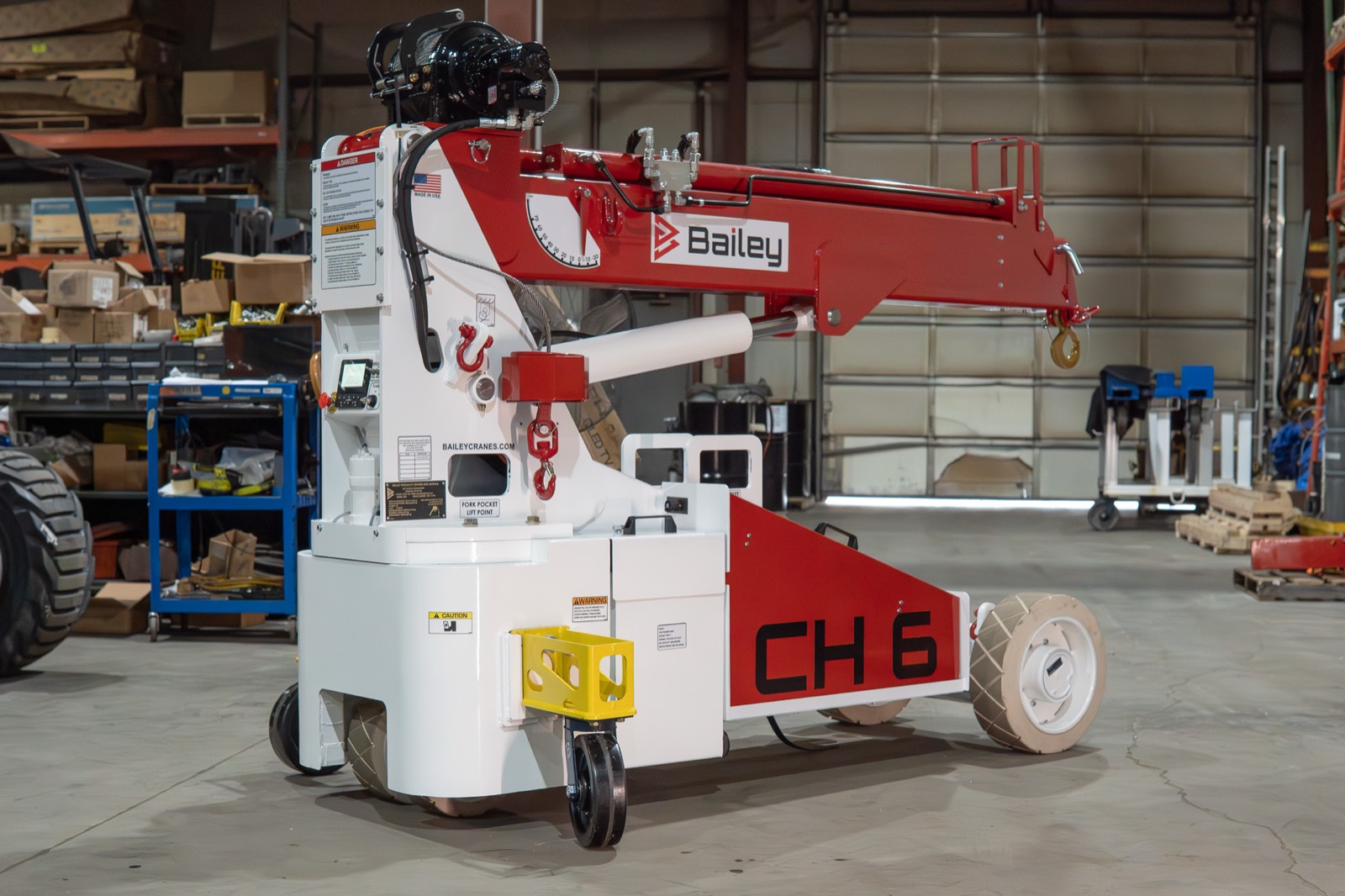
- Standard-door footprint. The Brandon base platform is 34½ inches wide and passes through normal building access without modification.
- Attachment-driven capability. The same chassis runs as a hoist truck, a vacuum lifter, a fork carriage, a Flipper for glass repositioning, and a robot-arm platform — one machine, many missions.
- Indoor-grade power. Electric variants deliver zero-emission pick-and-carry lifts inside cleanrooms, hospitals, and occupied facilities.
The lineup covers the common pick-and-carry configurations:
- The Brandon 6 — A 6,000-lb walk-behind hoist truck for glazing and structural lifts.
- The Brandon 6E — Electric version of the Brandon 6 for indoor and clean-environment use.
- Brandon 10 Omni — Omni-directional steering for tight maneuvering with a suspended load.
- Brandon Omni — Compact omni configuration for the tightest access points.
- The Junior — Vertical-shaft compact handler for HVAC, conduit, and framing.
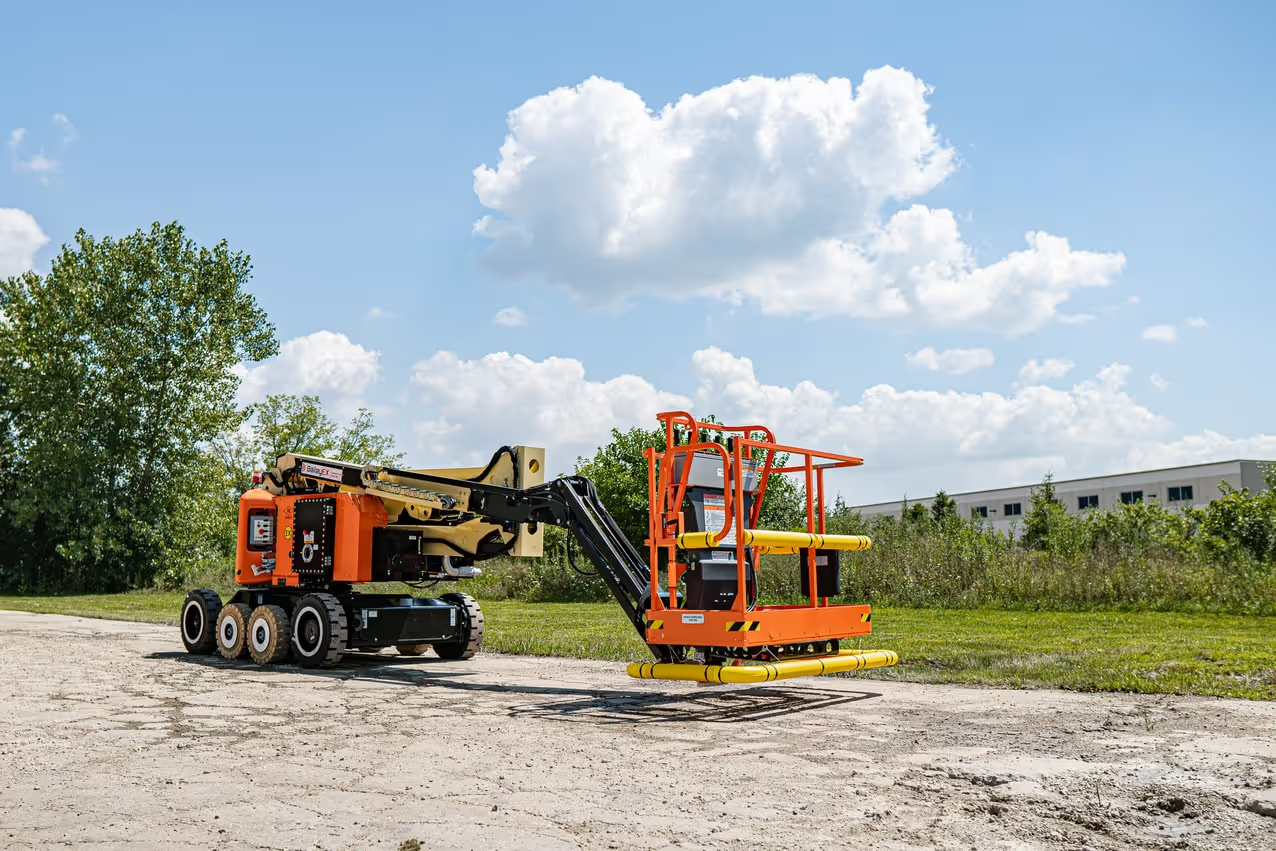
- Brandon Trax — Tracked configuration for uneven outdoor surfaces.
Frequently Asked Questions
What is a pick-and-carry crane?
A pick-and-carry crane is a self-propelled mobile crane that lifts a load and then travels with it suspended, without setting up outriggers between moves. It picks the load, carries it across the floor under its own power, and places it — eliminating the set-down, reposition, and re-rig cycle. Compact models are common in fabrication shops, warehouses, precast plants, and indoor facilities where loads must move horizontally in tight spaces.
What is the weight capacity of a walk-behind crane?
Walk-behind pick-and-carry cranes typically lift 1,000 to 6,000 lbs at the boom foot. Bailey's Brandon platform is rated to 6,000 lbs, with larger omni models handling heavier indoor lifts. Rated capacity falls as the boom extends and as the load is articulated outward, so the controlling number is the load-chart figure at your actual reach — not the headline maximum.
How high can a walk-behind crane lift?
Walk-behind and compact pick-and-carry cranes generally reach 8 to 20 feet depending on model, boom configuration, and counterweight. Larger compact and tracked models reach 25 feet or more. Maximum height and maximum capacity are rarely achievable simultaneously, so confirm both on the load chart for your configuration.
What is the difference between a pick-and-carry crane and a mobile crane?
A conventional mobile crane sets up on outriggers, lifts from a fixed position, and must set the load down before relocating. A pick-and-carry crane is designed to travel while the load is suspended, lifting on its tires or tracks. That makes it far faster for moving loads across a floor and far more compact, at the cost of lower rated capacity — it trades maximum lift for maneuverability in confined, indoor, and congested spaces.
Are pick-and-carry cranes electric or diesel?
Both are available. Electric pick-and-carry cranes are preferred indoors, in cleanrooms, and in emission-sensitive facilities because they produce zero exhaust and minimal noise and avoid hydraulic-oil contamination. Diesel and propane models remain useful outdoors where battery runtime is the limiting factor. Bailey's Brandon Electric and Brandon 6E deliver zero-emission pick-and-carry lifts for occupied and clean environments.
Is it safe to travel with a suspended load on a pick-and-carry crane?
Yes, when the crane is rated for it and the load chart is followed. These machines are engineered with on-rubber (or on-track) travel ratings specifically for moving suspended loads. Safe practice means keeping the load low and close to the machine, traveling slowly on level rated surfaces, derating for boom articulation, and never exceeding the on-rubber capacity — which is lower than the stationary rating.
Who makes industrial pick-and-carry cranes in the US?
Bailey Cranes, a Service-Disabled Veteran-Owned manufacturer in Muskego, Wisconsin, designs and builds compact pick-and-carry and walk-behind cranes for industrial, aerospace, defense, semiconductor, data center, and glass-installation applications. The Brandon Series passes through standard 36-inch doorways, and Bailey also builds custom pick-and-carry configurations when off-the-shelf machines don't fit a facility's constraints.
Next Steps
A pick-and-carry crane is the right choice when your work is about moving a load through a space, not lifting it from a fixed point. The wrong on-rubber rating wastes capital; the right machine becomes the most-used asset on the floor.
Explore the Brandon pick-and-carry lineup, review our attachment ecosystem, or contact our engineering team for a load-chart review on your next lift.
Ready to lift your service?

Additional Content
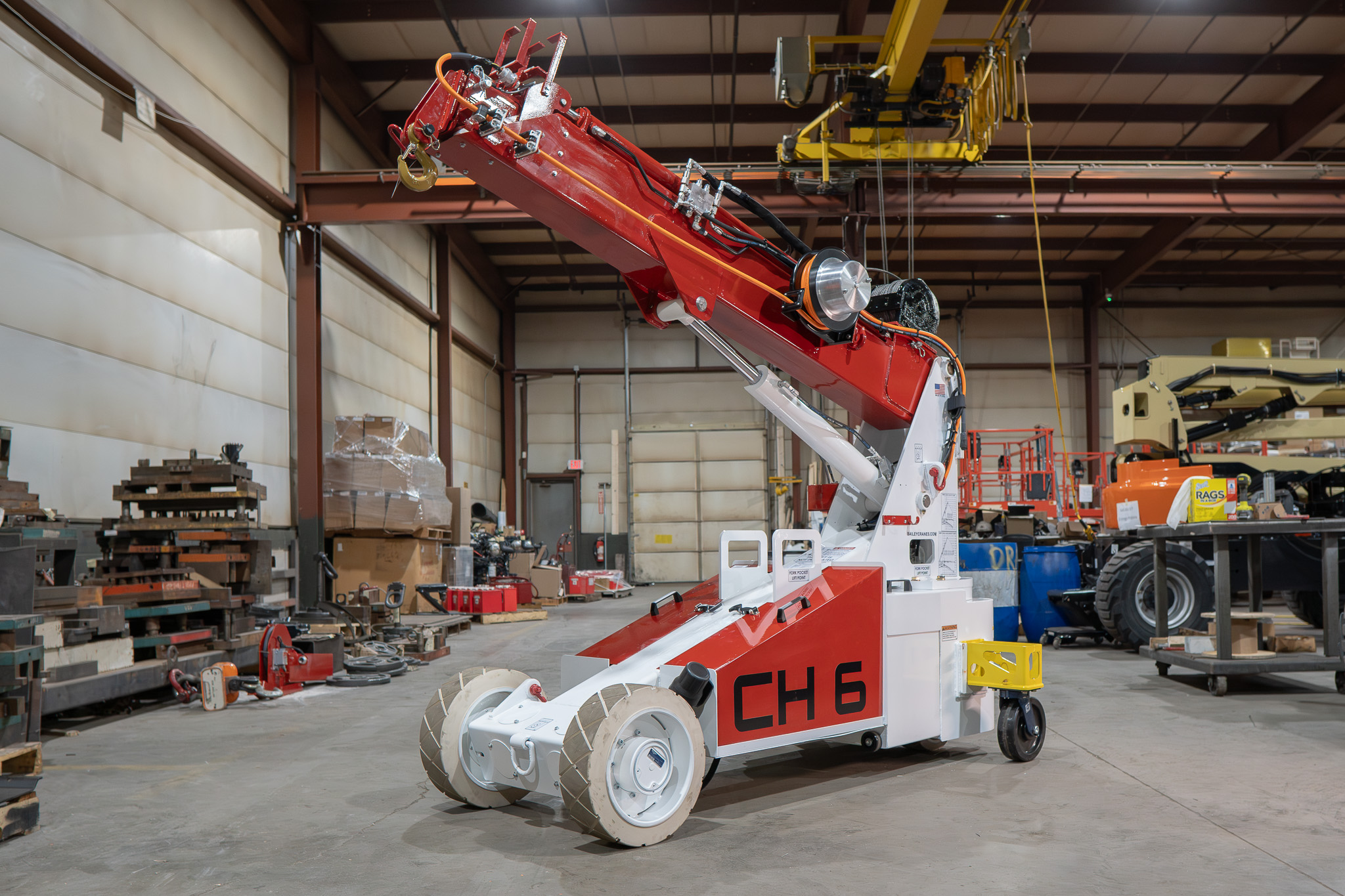
Proven Platforms. Precision-Engineered Solutions.
Partner with Bailey to transform proven platforms or build fully custom lifting solutions—engineered, manufactured, and supported under one roof for mission-critical environments where failure is not an option.