



Small Mobile Cranes: The Complete Guide to Compact Cranes for Industrial Lifting
If you've searched for a small mobile crane, a compact mobile crane, a walk-behind crane, or a mini crawler crane, you've likely found a confusing mix of equipment that ranges from 1,000-lb glazing tools to 10-ton truck-mounted machines. The category exists because conventional mobile cranes are simply too large, too heavy, or too disruptive for the places industrial work increasingly happens — indoors, in cleanrooms, on retrofit sites, on city streets, and inside aerospace hangars.
This guide explains what a small mobile crane is, the major types available, where each one fits, and how to specify the right machine for your facility. We've spent decades engineering compact lifting solutions at Bailey Cranes, and the wrong specification is the single most common reason a project goes over budget or stalls on safety review.
What Is a Small Mobile Crane?
A small mobile crane is a self-propelled lifting machine designed for restricted-access work — typically rated between 1,000 and 12,000 lbs, with a footprint narrow enough to pass through standard doorways or maneuver in tight urban spaces. Unlike full-size mobile cranes that require outrigger pads, road permits, and dedicated set-up zones, small mobile cranes are built to deploy quickly, work indoors, and operate near sensitive equipment without disruption.
The category covers several distinct machine types — walk-behind cranes, pick-and-carry cranes, mini crawler cranes, compact wheeled mobile cranes, and small truck-mounted cranes — each engineered for a different combination of capacity, surface conditions, and access constraints.
Small Mobile Crane vs. Compact Handler vs. Mini Crane: What's the Difference?
These terms are often used interchangeably, but they describe overlapping rather than identical equipment. Here's how to read them:
- Small mobile crane — A general term for any compact, self-propelled crane that travels under its own power. Most often used by industrial buyers and procurement teams.
- Compact mobile crane — Emphasizes the small footprint and indoor-capable form factor. Frequently wheeled, often urethane-tired for non-marking floors.
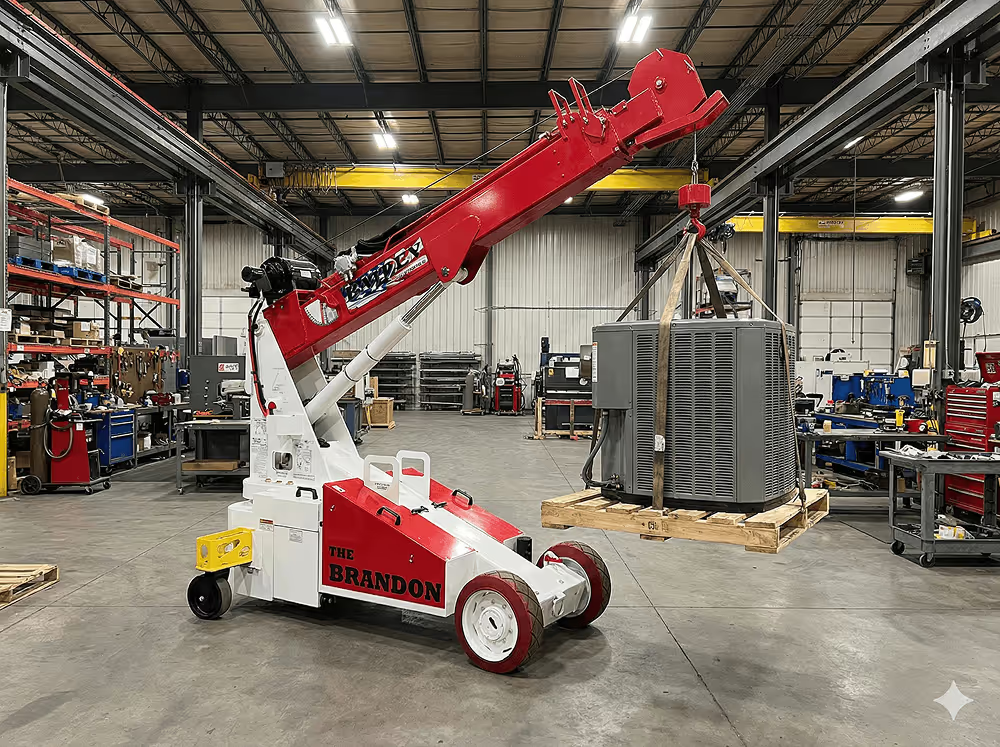
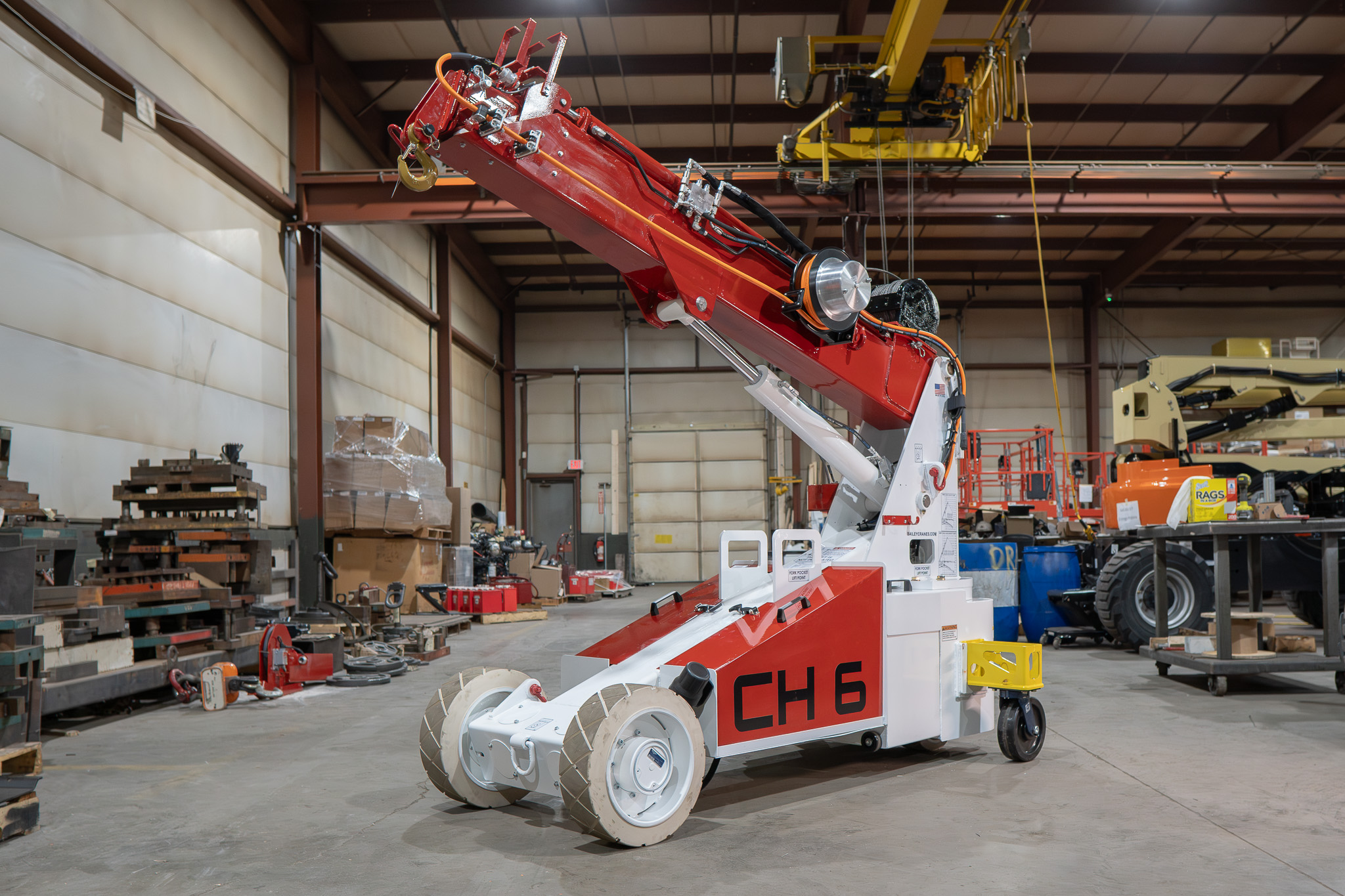
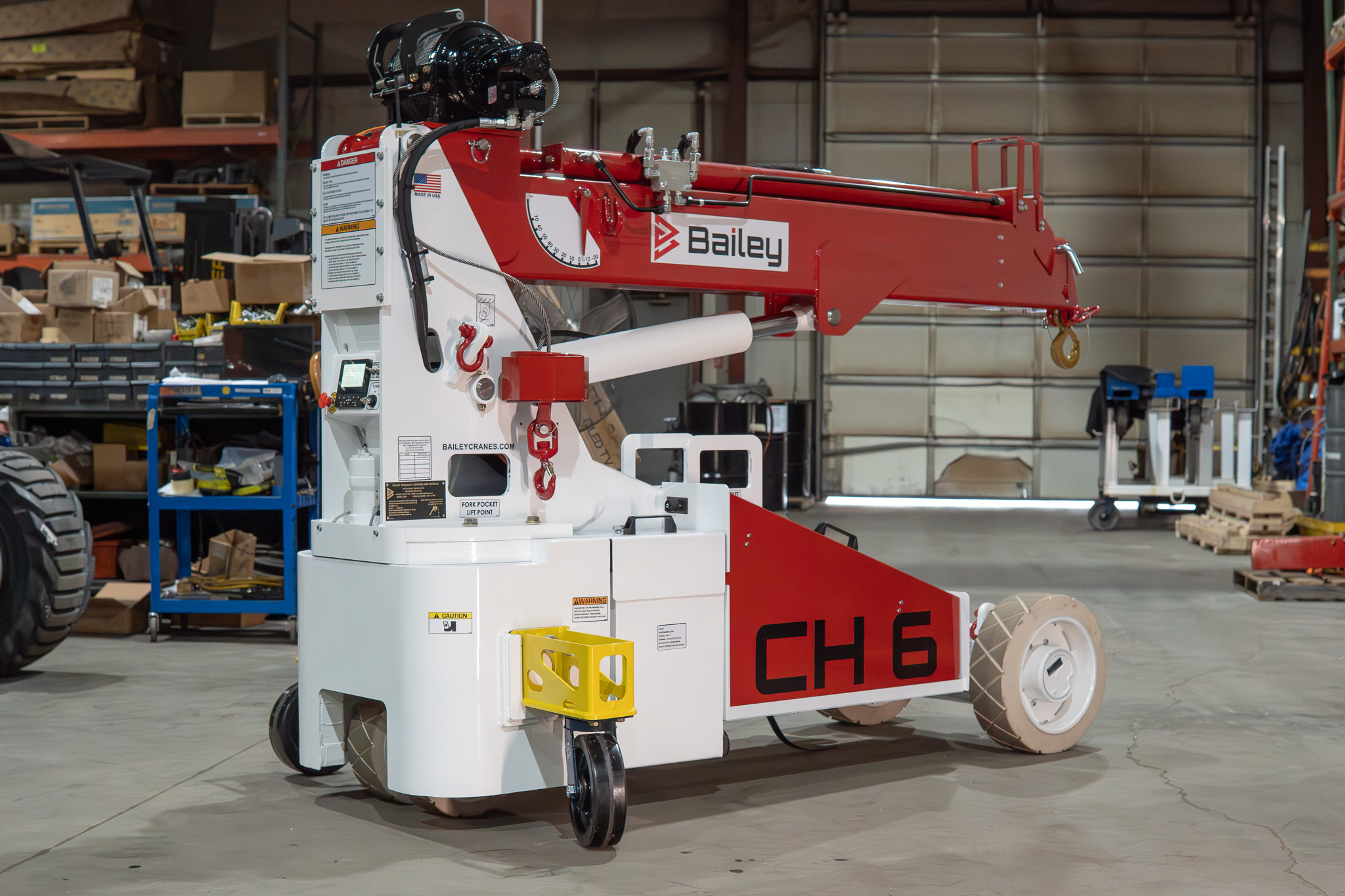
- Mini crane or compact handler — Industry shorthand for highly maneuverable, attachment-driven lifting machines like Bailey's Brandon Series. These are purpose-built for restricted indoor work.
- Mini crawler crane — A tracked variant designed for uneven outdoor surfaces, soft ground, or grade work where wheeled cranes lose traction.
- Walk-behind crane — A pedestrian-operated compact crane, usually rated under 4,000 lbs, common in glazing, signage, and HVAC installation.
If you're sourcing equipment, expect every vendor to use their own terminology. Specify by capacity, footprint, and power source — not by category name.
Types of Small Mobile Cranes
1. Walk-Behind Cranes
Walk-behind cranes are pedestrian-operated lifting machines, typically rated between 1,000 and 4,000 lbs. The operator walks alongside the machine, controlling lift, swing, and travel from a handheld pendant or grip. These are the smallest small mobile cranes on the market and are widely used in glazing, signage installation, light HVAC, and museum-grade artifact handling.
2. Pick-and-Carry Cranes
A pick-and-carry crane lifts a load and then travels with it — no need to set down, reposition, and re-rig. Small pick-and-carry cranes are common in fabrication shops, precast concrete plants, and warehouse environments where loads need to move horizontally across the floor.
3. Mini Crawler Cranes
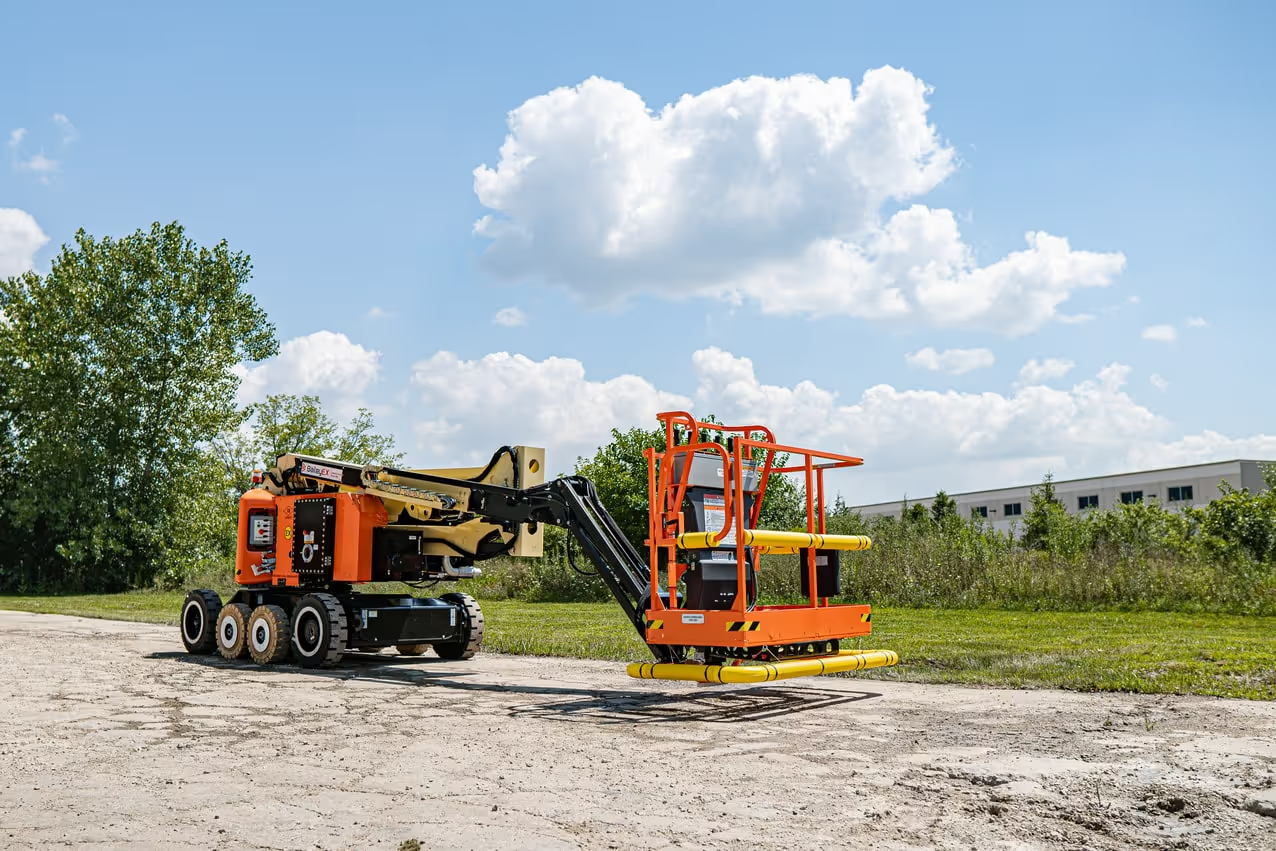
Mini crawler cranes use rubber or steel tracks instead of wheels. Tracks distribute weight, allow operation on uneven ground, and let the machine climb low stairs or grades. Outdoor restoration, landscape installation, urban infrastructure work, and rough-terrain glass installation are typical use cases.
4. Compact Wheeled Mobile Cranes
These are wheeled small mobile cranes with hydraulic or electric drive. The wheeled design gives them speed on smooth surfaces — finished concrete, polished floors, paved lots — and makes them the default choice for indoor industrial work.
5. Small Truck-Mounted Cranes
The truck-mounted category overlaps with utility service work — small carry-deck cranes, mini boom trucks, and service-body cranes. These are road-legal, transport themselves between sites, and trade some maneuverability for travel speed.
Where Small Mobile Cranes Excel
Small mobile cranes solve the problem of access. Anywhere a conventional mobile crane can't fit, can't be permitted, or can't operate without disrupting work, a compact alternative becomes the right tool. The five environments below account for most of the demand we see.
Indoor Construction, Retrofit, and MRO
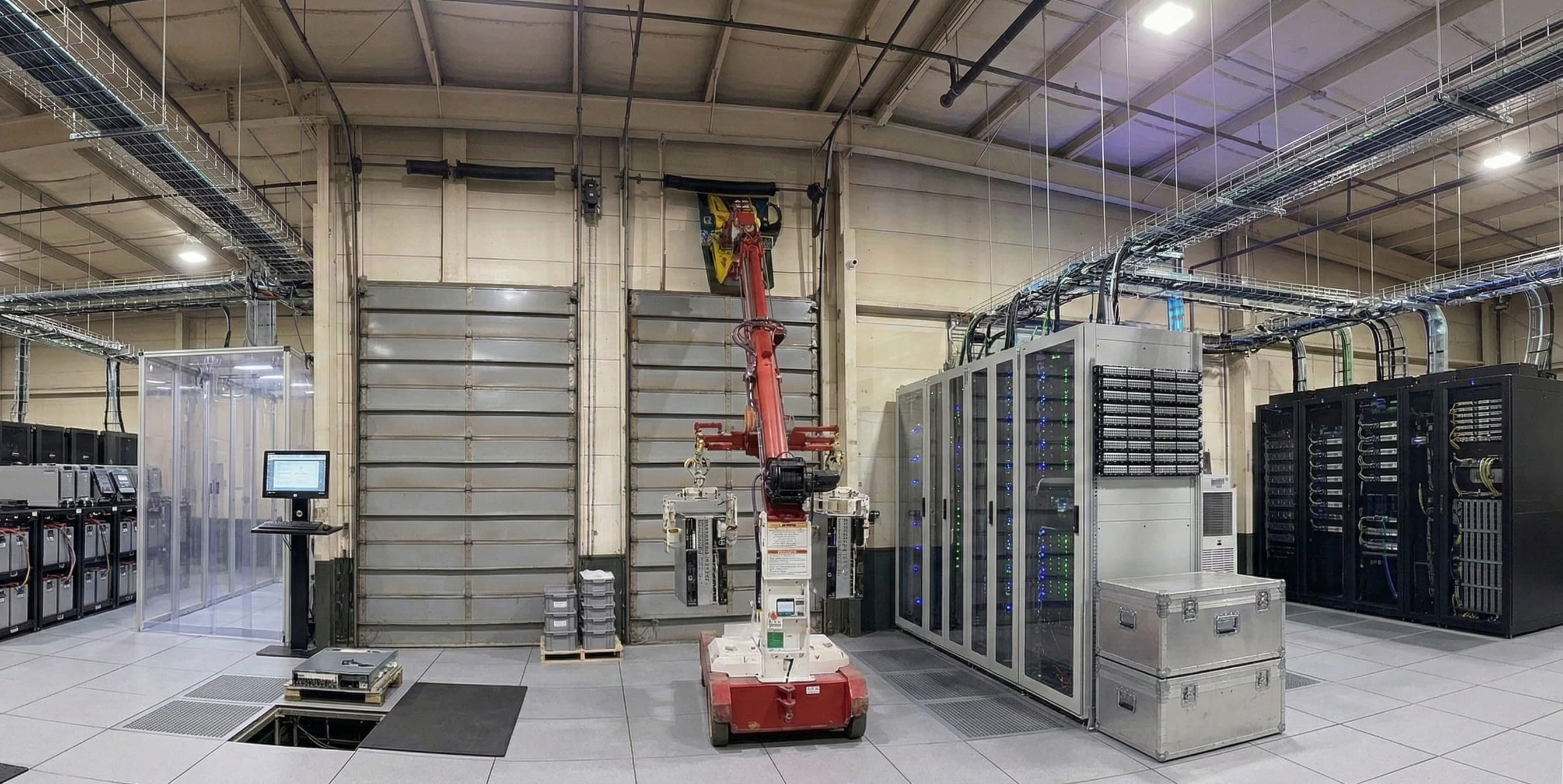
Hospital expansions, data center build-outs, semiconductor fab retooling, and aerospace MRO all share one constraint: the building is finished, occupied, or operational. A full-size crane can't enter. Walk-behind and compact wheeled mobile cranes move through standard 36-inch doorways, work without disturbing adjacent operations, and don't require structural permits for floor loading.
Urban Road Maintenance and Municipal Engineering
City work happens on streets you can't close, near utilities you can't strike, and around pedestrians you can't disrupt. Small mobile cranes set up in a single lane, lift signage, transformers, and street furniture, and clear the site before peak traffic returns.
Glass and Glazing Installation
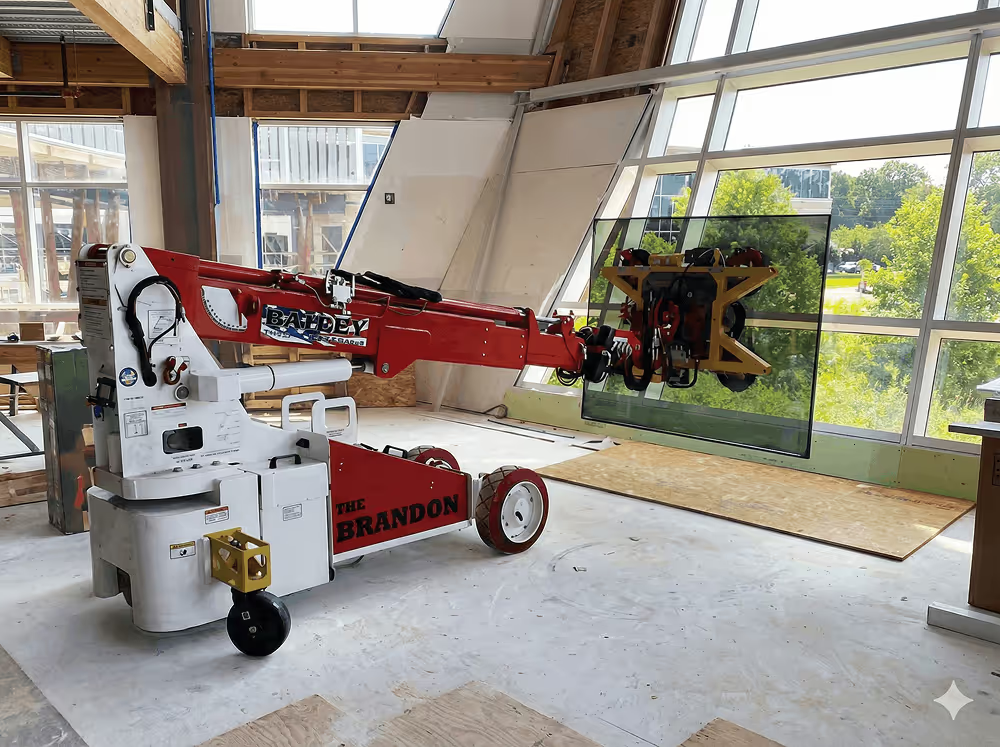
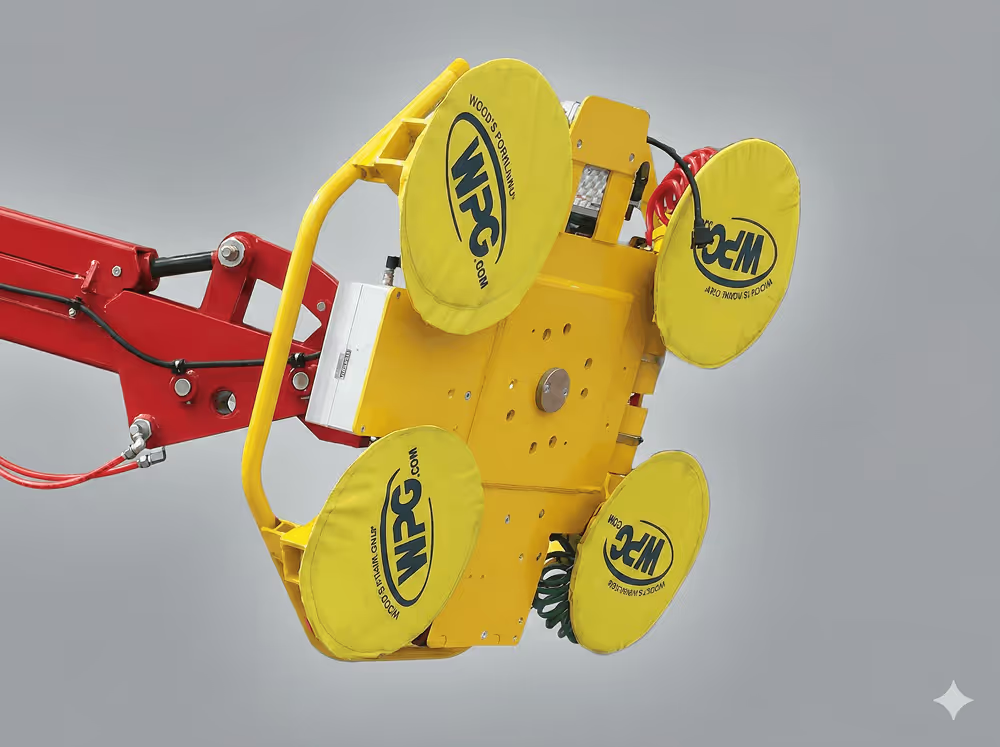
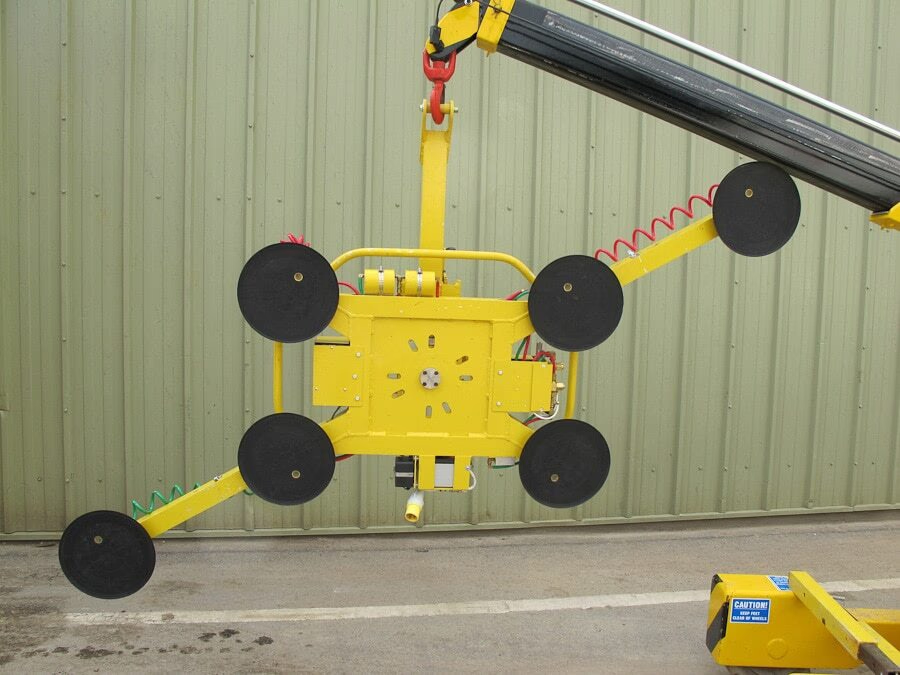
Glass panels are heavy, awkward, and unforgiving — a single dropped lite costs thousands. Specialized small mobile cranes — including dedicated glass lifting equipment — combine vacuum cups, multi-axis articulation, and walk-behind precision to place panels safely on facades, in atriums, and on curtainwall installs.
Aerospace MRO and Defense Maintenance
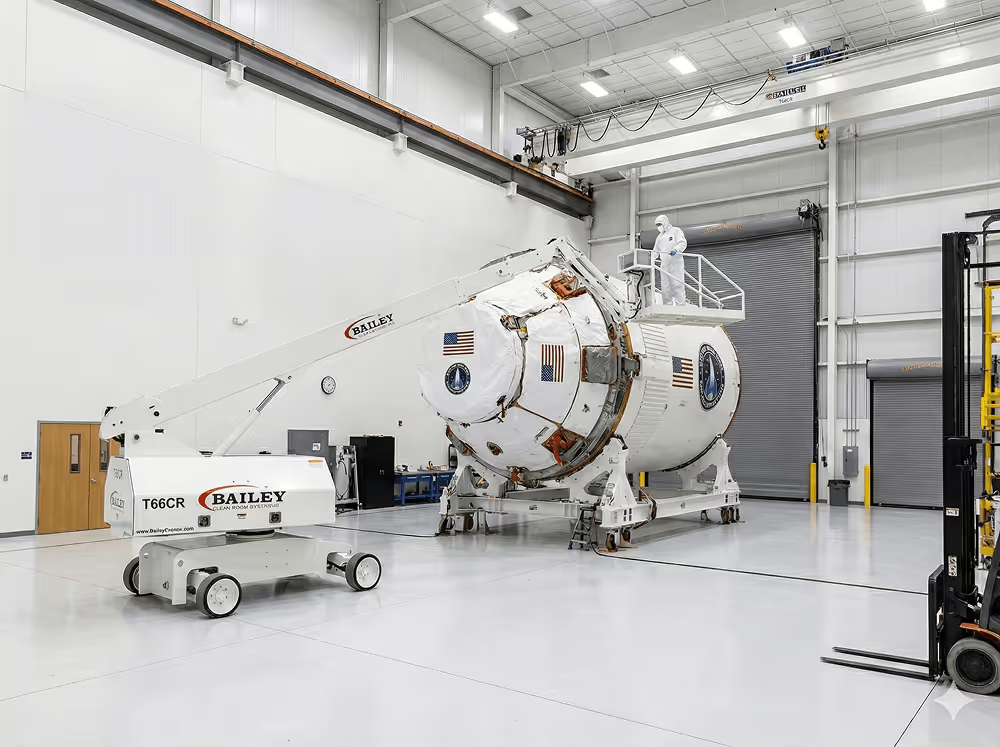
Aircraft hangars, missile maintenance bays, and defense overhaul facilities require equipment that fits under wings, between bulkheads, and inside narrow service corridors. Compact mobile cranes with custom attachments handle fuselage components, engine pods, and avionics modules without the staging time a conventional crane requires.
Cleanroom and Semiconductor Manufacturing
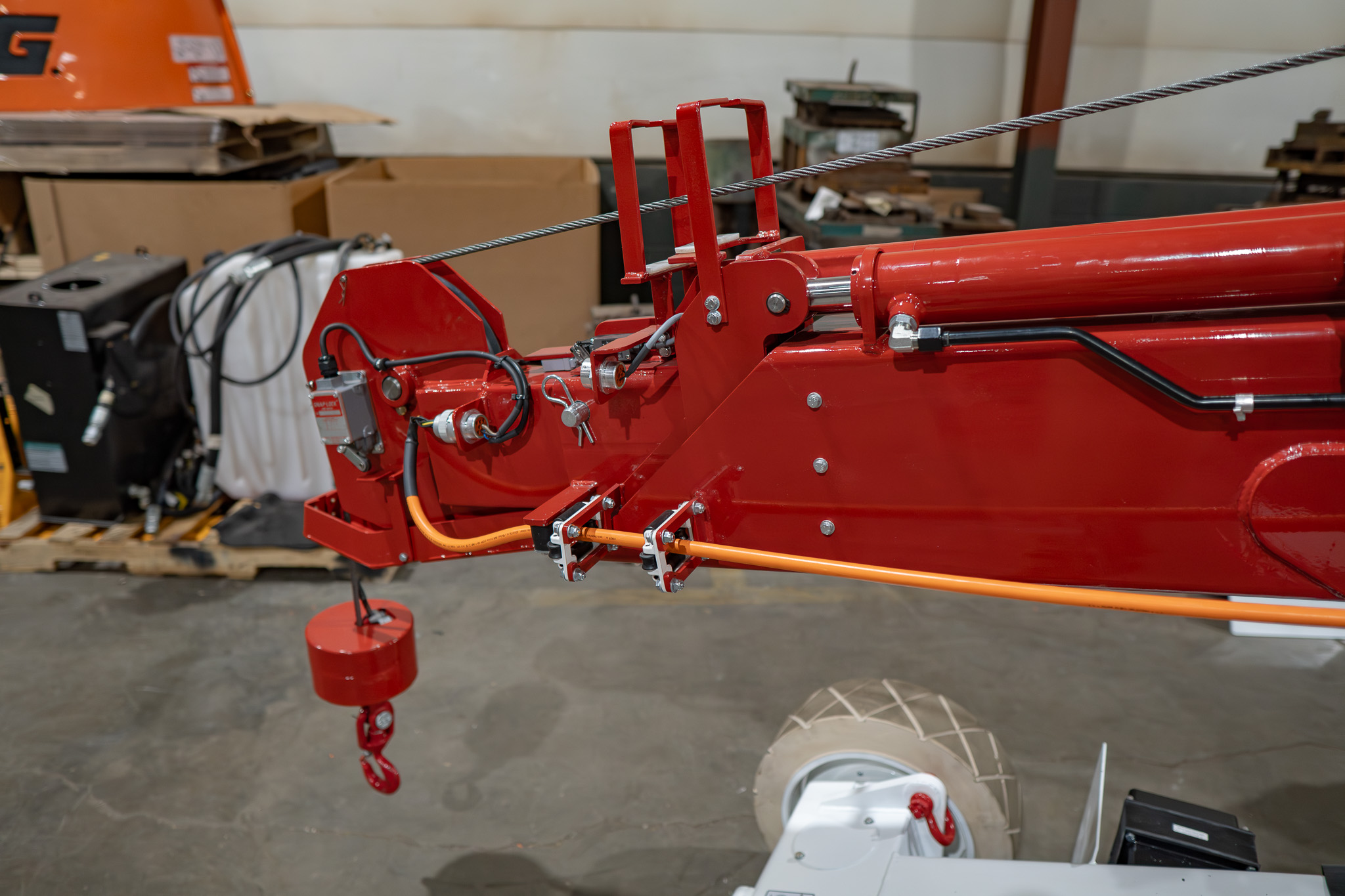
Semiconductor fabs and pharma cleanrooms cannot tolerate hydraulic-oil leaks, exhaust particulates, or rubber-tire chemistry. Electric compact mobile cranes with clean-grade tires and sealed drives meet ISO 14644 protocols. See our clean room man lifts and cleanroom-grade compact cranes for environment-specific configurations.
How to Choose the Right Small Mobile Crane
Selecting a small mobile crane is a specification exercise, not a catalog exercise. The six criteria below cover the decisions that determine whether a machine will perform on your floor or sit unused.
1. Capacity at Working Reach
Maximum capacity at the boom foot is not the number that matters. Read the load chart at the actual reach and actual configuration you'll use. A 6,000-lb crane often derates to 1,500 lbs at full extension.
2. Footprint and Doorway Clearance
Measure your narrowest access point — typically a standard 36-inch single doorway (32 inches clear). Bailey's Brandon platform, for example, is 34½ inches wide and passes through standard doors without removing the frame. If the machine has to be partially disassembled to enter the building, your operational cost just doubled.
3. Power Source: Electric vs. Internal Combustion
Electric compact mobile cranes are mandatory for indoor work, cleanrooms, and emission-restricted facilities. They're also quieter, faster to deploy, and have fewer service points. Diesel and propane options remain relevant outdoors where battery runtime is the constraint.
4. Outrigger Configuration
Some small mobile cranes operate on outriggers (stable, larger setup footprint). Others lift on tires or tracks (compact, faster to deploy, lower capacity). Pick the configuration that matches your floor space and load chart needs — not the one that looks more capable on paper.
5. Surface Conditions
Polished concrete, raised access floor, gravel, and dirt all impose different traction and floor-loading constraints. A wheeled compact crane on a raised access floor needs floor-loading verification; a mini crawler crane on a finished epoxy floor can mar the surface.
6. Operator Mode and Attachment Ecosystem
Walk-behind cranes give the operator maximum control near the load. Ride-on cranes move faster between lifts. Whatever you choose, verify the attachment ecosystem — vacuum lifters, fork carriages, basket attachments, and rotators — because a small mobile crane that only does one job rarely earns its keep on an industrial floor.
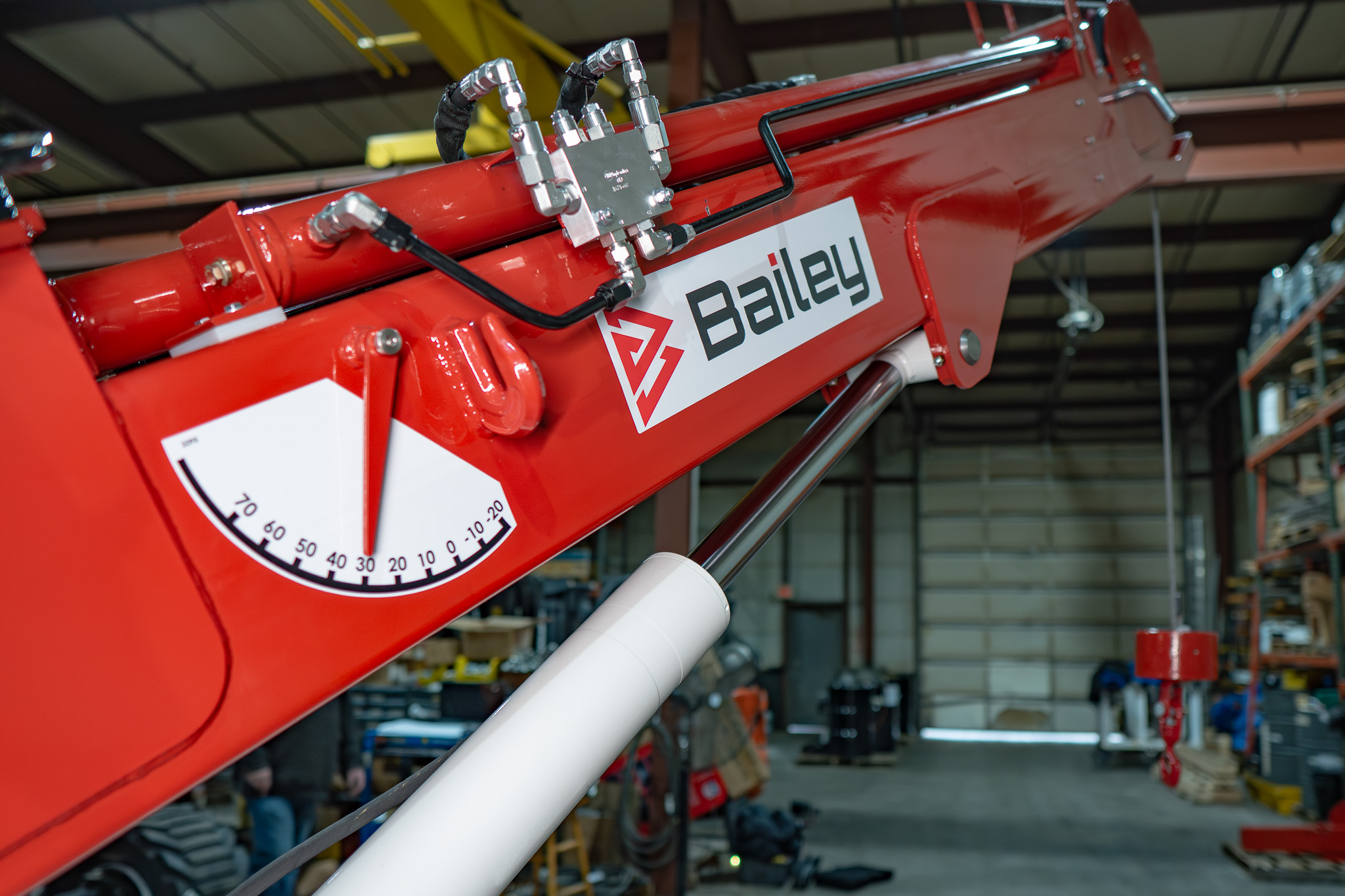
Inside the Bailey Brandon Compact Mobile Crane Series
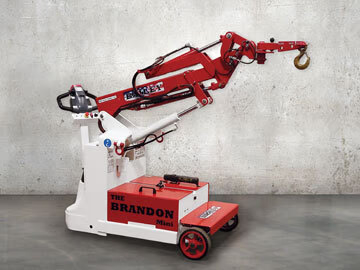
Bailey Cranes designs and manufactures small mobile cranes from our facility in Muskego, Wisconsin. The Brandon Series is our line of compact mobile cranes engineered for indoor industrial use. It's built around three principles relevant to anyone evaluating this category:
- Standard-door footprint. The Brandon base platform is 34½ inches wide. It passes through normal building access without modification.
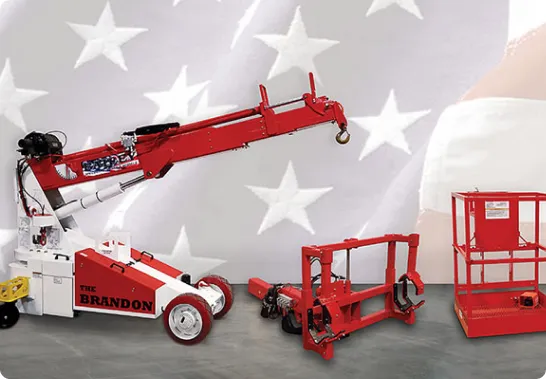
- Attachment-driven capability. The same chassis runs as a hoist truck, a vacuum lifter, a fork carriage, a Flipper for glass repositioning, and a robot-arm platform. One machine, many missions.
- Indoor-grade power. Electric variants like the Brandon Electric and Brandon 6E deliver zero-emission lifts inside cleanrooms, hospitals, and occupied facilities.
The Brandon lineup covers the most common small mobile crane configurations:
- The Brandon 6 — A 6,000-lb hoist truck for glazing and structural lifts.
- The Brandon 6E — Electric version of the Brandon 6 for indoor and clean-environment use.
- Brandon 10 Omni — Omni-directional steering for tight maneuvering in confined spaces.
- Brandon Omni — Compact version of the 10 Omni for the tightest access points.
- The Junior — Vertical-shaft compact handler for HVAC, conduit, and drywall framing.
- Brandon Trax — Mini crawler configuration for uneven outdoor surfaces.
Frequently Asked Questions
How much weight can a small mobile crane lift?
Most small mobile cranes used in industrial settings lift between 1,000 and 12,000 lbs. The Brandon platform is rated to 6,000 lbs at the boom foot, and larger omnidirectional configurations handle heavier indoor lifts. Always reference the load chart for your specific reach — capacity drops sharply as the boom extends.
How high can a walk-behind crane lift?
Walk-behind cranes generally reach 8 to 20 feet depending on counterweight and boom configuration. Larger compact and mini crawler cranes reach 25 feet or more. Maximum height and maximum capacity are not achievable simultaneously — check the load chart for your specific lift.
What is the smallest mobile crane?
The smallest mobile cranes are pedestrian-operated walk-behind models, often under 30 inches wide and rated for loads of 1,000 to 2,000 lbs. These are the only mobile cranes that pass through residential doorways and operate inside finished interiors without floor protection.
Can a small mobile crane fit through a standard doorway?
Yes. Many small mobile cranes — including the Bailey Brandon at 34½ inches wide — are engineered to pass through standard 36-inch single doorways. This is the single most common reason buyers choose compact cranes over conventional mobile cranes for indoor and retrofit work.
Are compact mobile cranes electric or diesel?
Both are available. Electric compact mobile cranes are preferred for indoor, cleanroom, and emission-sensitive work because they produce zero exhaust and minimal noise. Diesel and hydraulic models remain useful outdoors where battery runtime is a limitation.
Who manufactures small mobile cranes for industrial use in the US?
Bailey Cranes, a Service-Disabled Veteran-Owned manufacturer in Muskego, Wisconsin, designs and builds small mobile cranes for industrial, aerospace, defense, semiconductor, and data center applications. Bailey also engineers custom compact lifting solutions when off-the-shelf machines don't fit a facility's constraints.
Next Steps
A small mobile crane is only the right choice when its capacity, footprint, power source, and attachment ecosystem match the work. The wrong machine wastes capital; the right one becomes the most-used asset on the floor.
Explore the Brandon compact mobile crane lineup, review our attachment ecosystem, or contact our engineering team for a specification review on your next lift.
Ready to lift your service?

Additional Content
Proven Platforms. Precision-Engineered Solutions.
Partner with Bailey to transform proven platforms or build fully custom lifting solutions—engineered, manufactured, and supported under one roof for mission-critical environments where failure is not an option.