



How we stop a scissor lift from hitting things.
A field walk-through of Bailey's Collision Avoidance System — 2D LiDAR plus ultrasonic detection, retrofit onto a Skyjack SJ4732 E without modifying a single OEM wire.
Scissor lifts work where structures, scaffolding and stock crowd in from every side. The operator can't see every corner of the platform — and a single contact can take a machine, a wall, or a worker out of service. One contact incident costs more than the retrofit that would have prevented it.
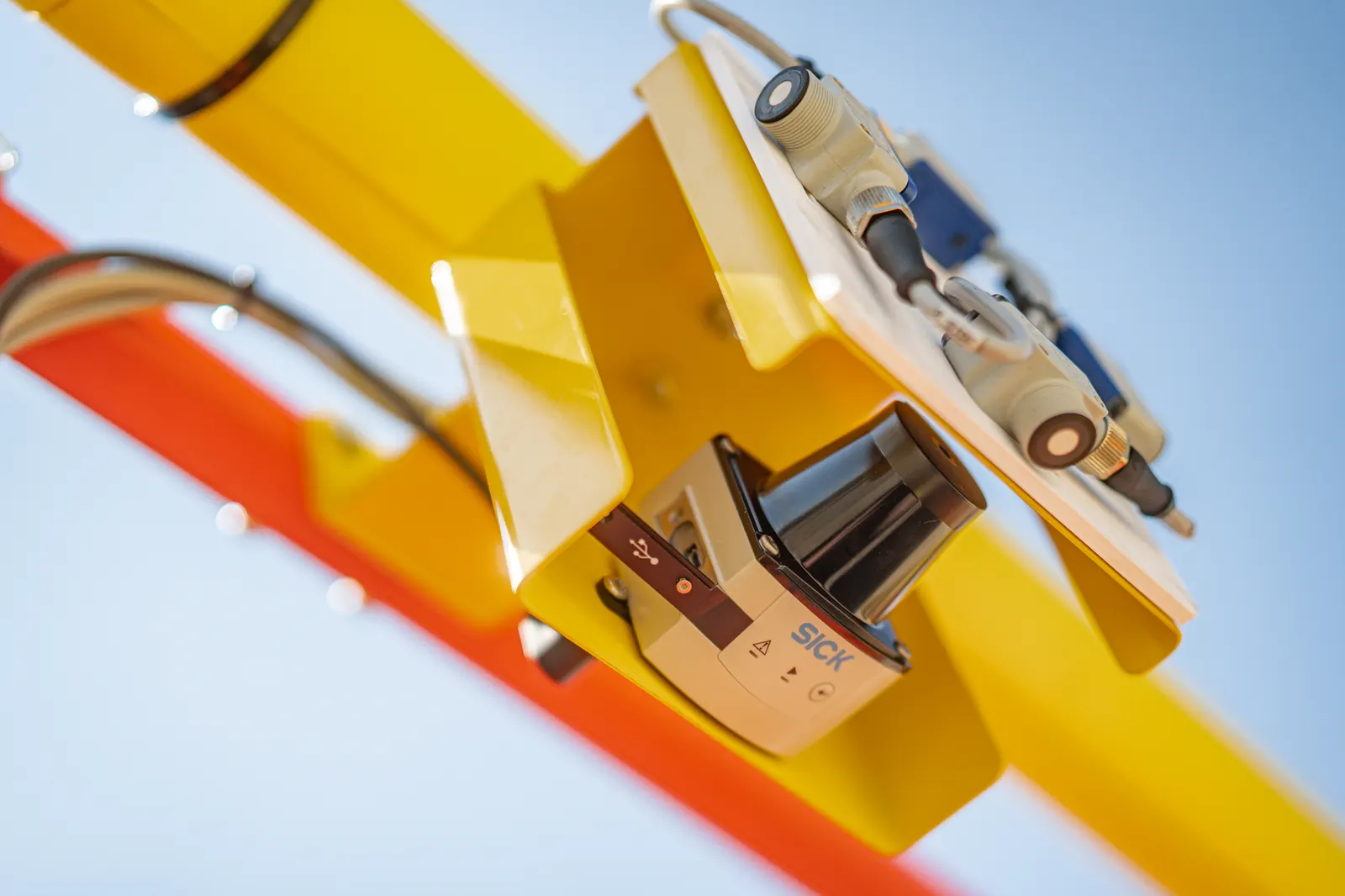
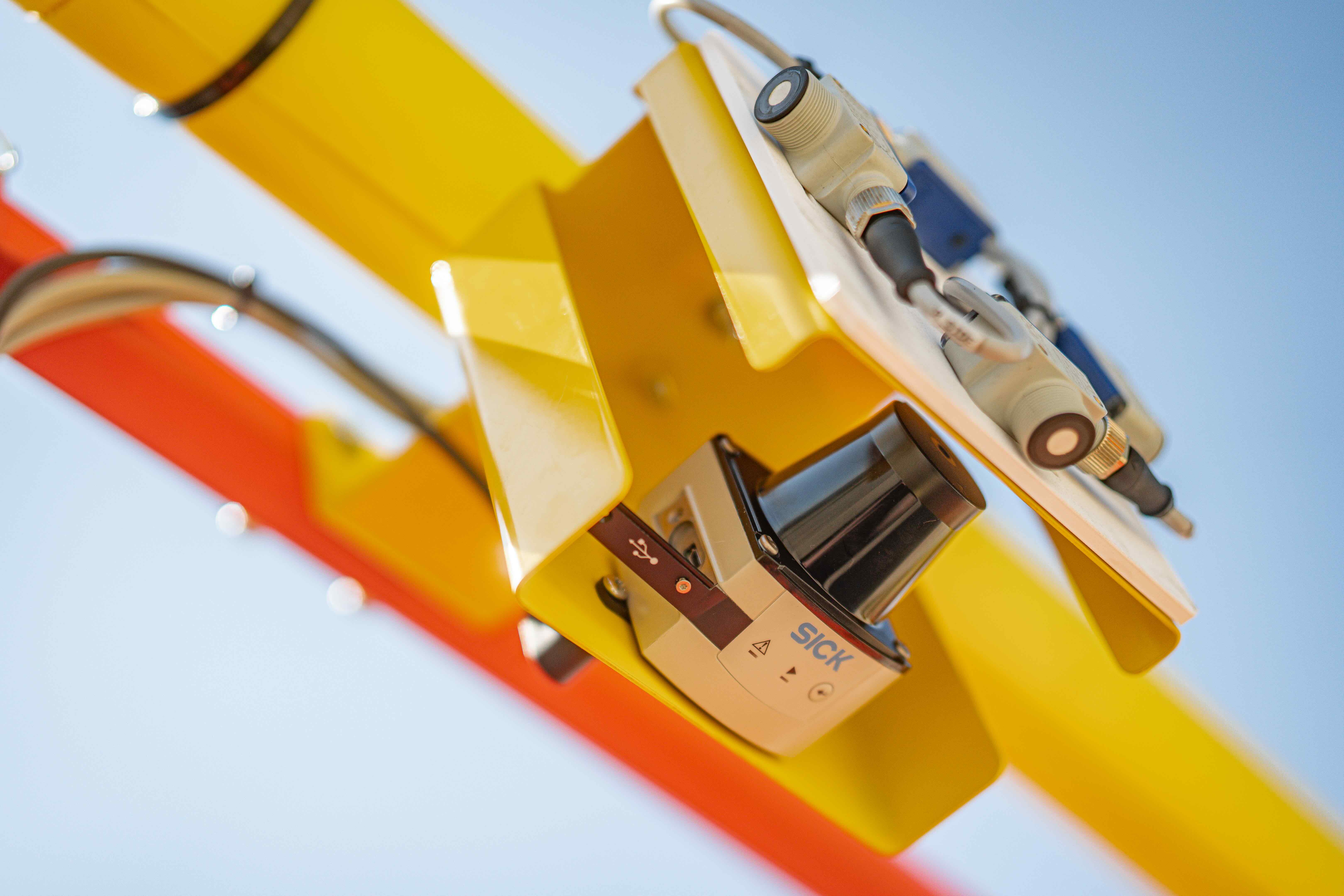
- Two layers of sensing. Two planes of 2D LiDAR for graduated warn/stop zones; eight ultrasonics for the gaps between them.
- Adaptive zones. Coverage widens when the deck extends; coverage steps lower every five feet the lift rises.
- Non-invasive install. The factory platform-to-base plug is intercepted through a Bailey controller. No OEM wiring is modified.
- Operator-first. Creep before cutout. Buzzer only on attempted motion. Momentary override at the platform; supervisor key on the main panel.
Tight spaces. Big consequences.
Aerial work platforms operate at the intersection of two unforgiving constraints: tight aisles and unforgiving inventory. A racking upright, an HVAC duct, a process pipe — any of them can become an expensive incident the moment an operator's attention catches on the platform load instead of the machine envelope.
The Bailey Collision Avoidance System adds a sensing layer to the OEM machine — without modifying its controls. It intercepts the factory CAN bus through a Bailey-installed controller, then applies its own logic on top of Skyjack's native command stream.
The design rule that drove every decision: the operator stays in charge. CAS protects against obstacles, but never silently locks an operator out.
Three states. One rule.
The CAS layer has three behavioral states. The host machine drives normally — until something enters a zone.
The LiDAR footprint isn't static. It moves with the deck.
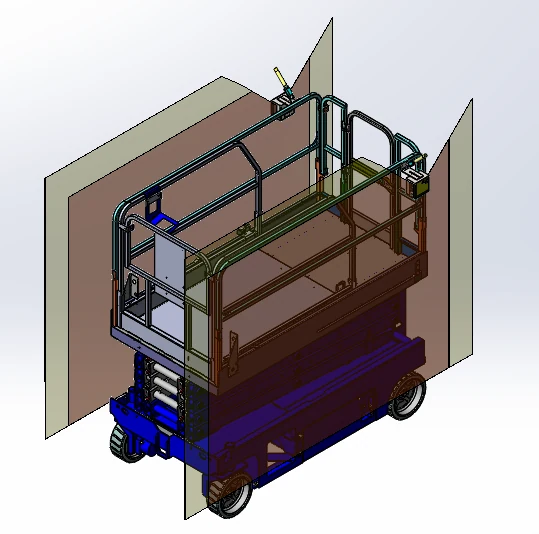
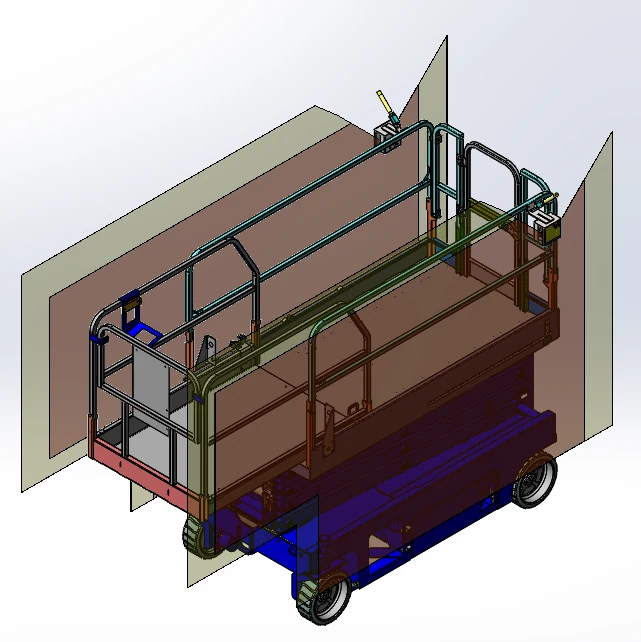
There are two LiDAR planes located just outside the platform-and-rails (PAR). Their scanning profiles shift in two independent ways.
Method 1 — zones follow the deck.
When the platform extends, the LiDAR footprint widens on the deck-extension side to cover the full deck envelope — not just the stowed width. Stowed platforms get a tighter envelope; extended platforms get the coverage they need.
Method 2 — zones drop with height.
Every five feet of elevation, the LiDAR projection steps further beneath the armstack — toward the wheels. This applies to both retracted and extended deck configurations.
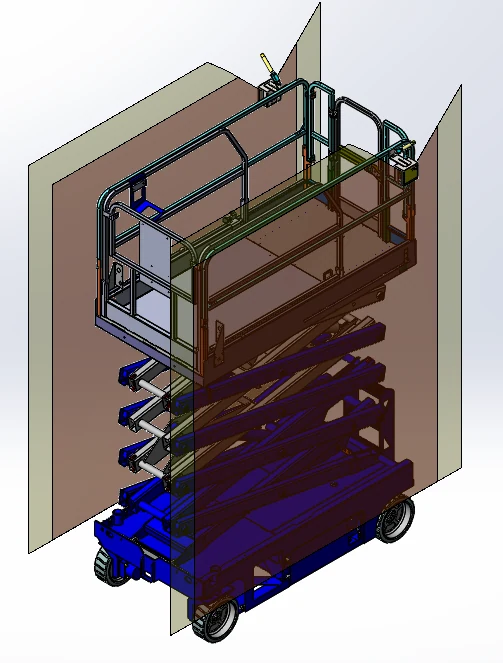
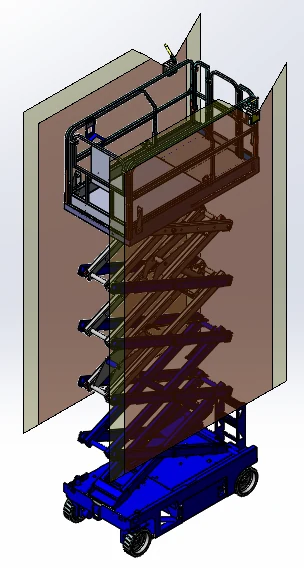
As the armstack rises, the scanning planes descend with it — keeping ground-level obstacles in view from any platform height. One geometry doesn't cover every job.
Where LiDAR can't see, ultrasonics do.
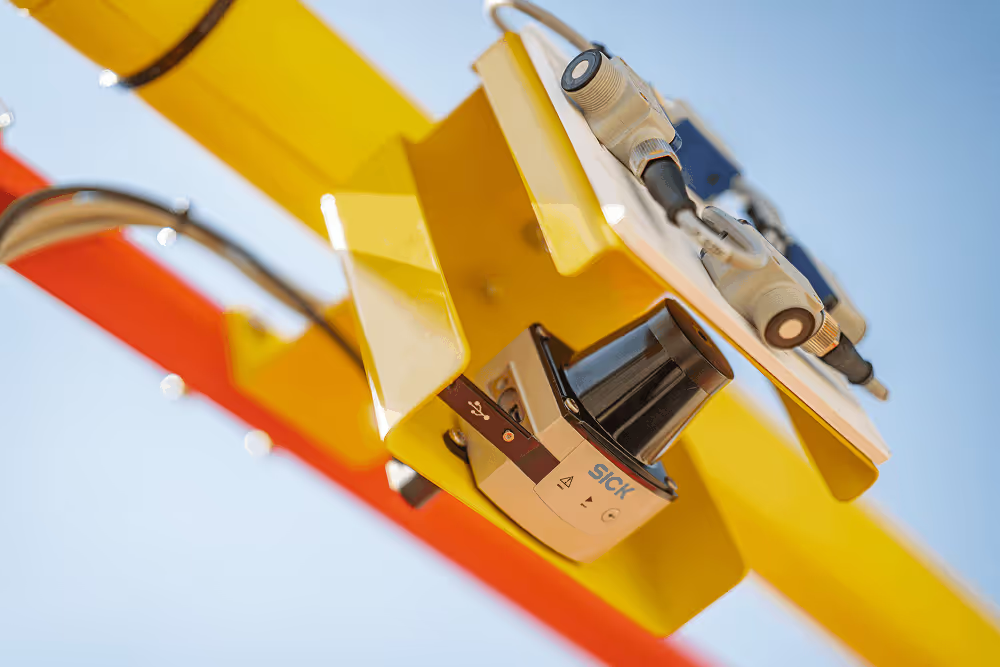
Eight ultrasonic sensors are located on the sides of the scissor brackets and on the front of the machine. They have a digital output and are programmed to trip at approximately eight inches from any obstacle.
Ultrasonics backfill the blind areas between the two LiDAR planes — on the scissor brackets and at the front of the machine. They drive only the stop state. There is no graduated warning from this layer.
Non-invasive by design.
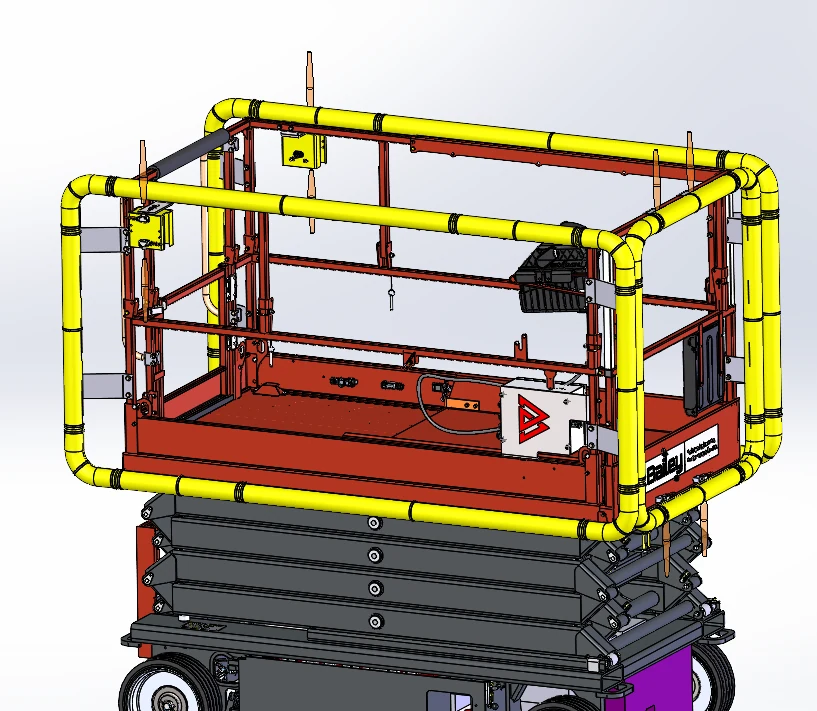
The factory plug between the Skyjack platform controller and the base is detached — then routed through the Bailey CAS main box. The original wiring stays intact. From the host machine's point of view, it is still talking to its own controller; the Bailey logic sits in the middle and decides whether to pass each CAN message through, modify it, or interrupt it.
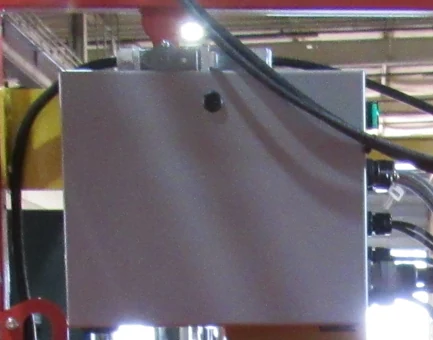
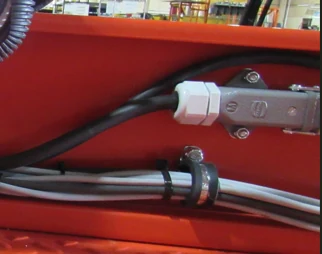
Inside the control box is the SC50 controller — the main logic hub. It reads the CAN messages of the Skyjack system and interrupts or replays them based on the state of the LiDAR and ultrasonic sensors. Because the OEM wiring is untouched, the machine remains serviceable on factory tooling, and warranty paths stay clean.
The operator stays in charge.
The operator interface is mounted on the side of the platform controls. It consists of an override button, a stop-zone LED indicator, and a warning buzzer. Two override mechanisms keep the lift usable when judgment is needed:
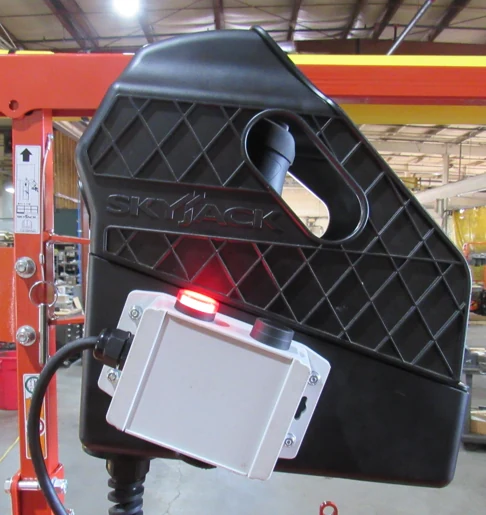
The warning buzzer only sounds when the operator tries to move into a zone — not when the lift is simply parked near an obstacle. This rule eliminates nuisance noise on jobs where the lift sits close to walls or racking for extended periods.
A retrofit that respects the machine.
Damaged decks, bent rails, OSHA-recordable near-misses, warranty-voiding repairs — the cost of a single contact incident exceeds the cost of the retrofit that would have prevented it. The incidents you don't have are the most valuable: you simply never see the invoice.
Bailey's CAS retrofits onto your existing Skyjack platforms with adaptive LiDAR zones, layered ultrasonic backfill, and operator-first signaling that creeps before it stops. The OEM control system stays intact. The machine stays under warranty. The operator stays in charge.
If you're the safety manager writing up the near-misses, the fleet manager approving the repair invoices, or the plant engineer specifying lifts that have to work around your racks and process equipment — this is the layer your machines are probably missing. Contact our team to talk through a retrofit for your fleet.
Ready to lift your service?

Additional Content
Proven Platforms. Precision-Engineered Solutions.
Partner with Bailey to transform proven platforms or build fully custom lifting solutions—engineered, manufactured, and supported under one roof for mission-critical environments where failure is not an option.