

Products
More Than Explosion Proof Aerial Lifts

Explosion Proof Aerial Lifts

Explosion Proof
[Aerial Lifts]

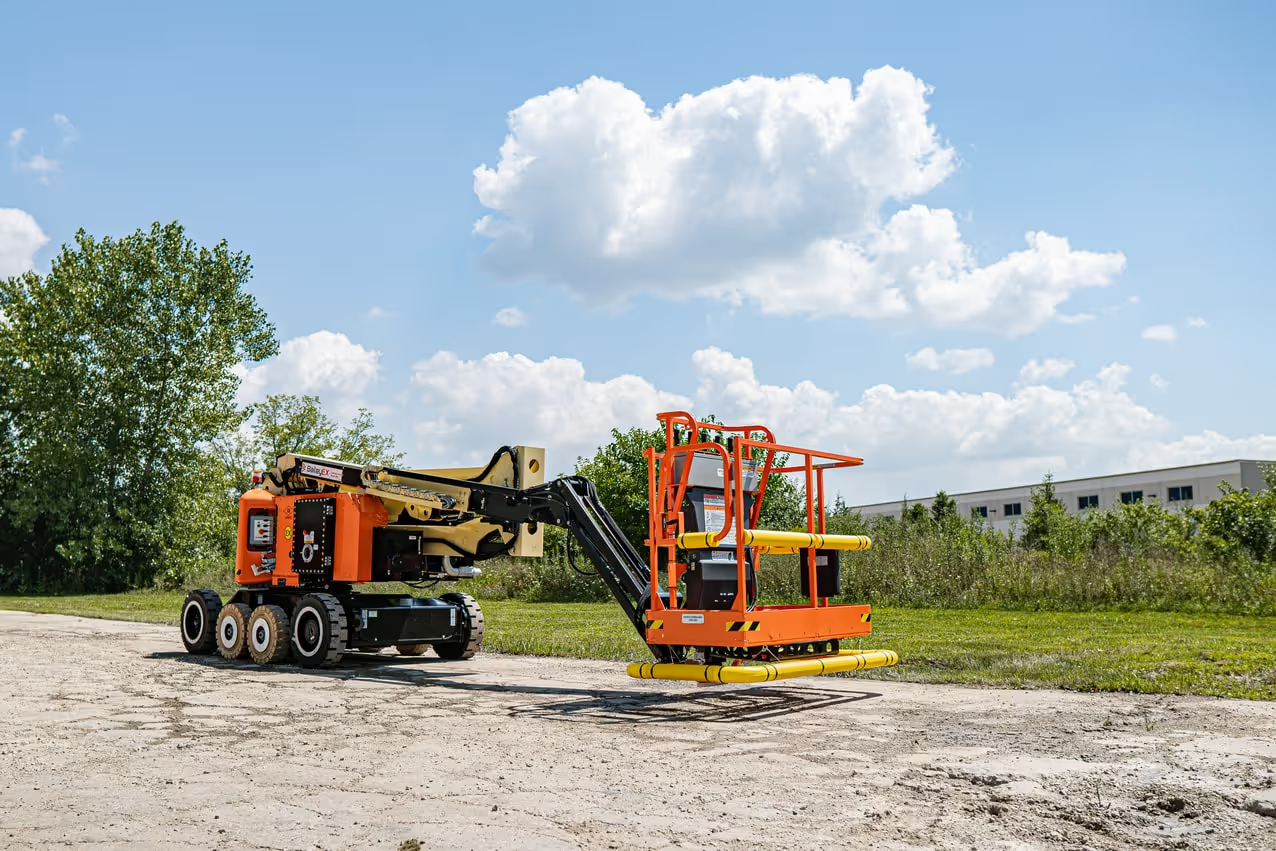
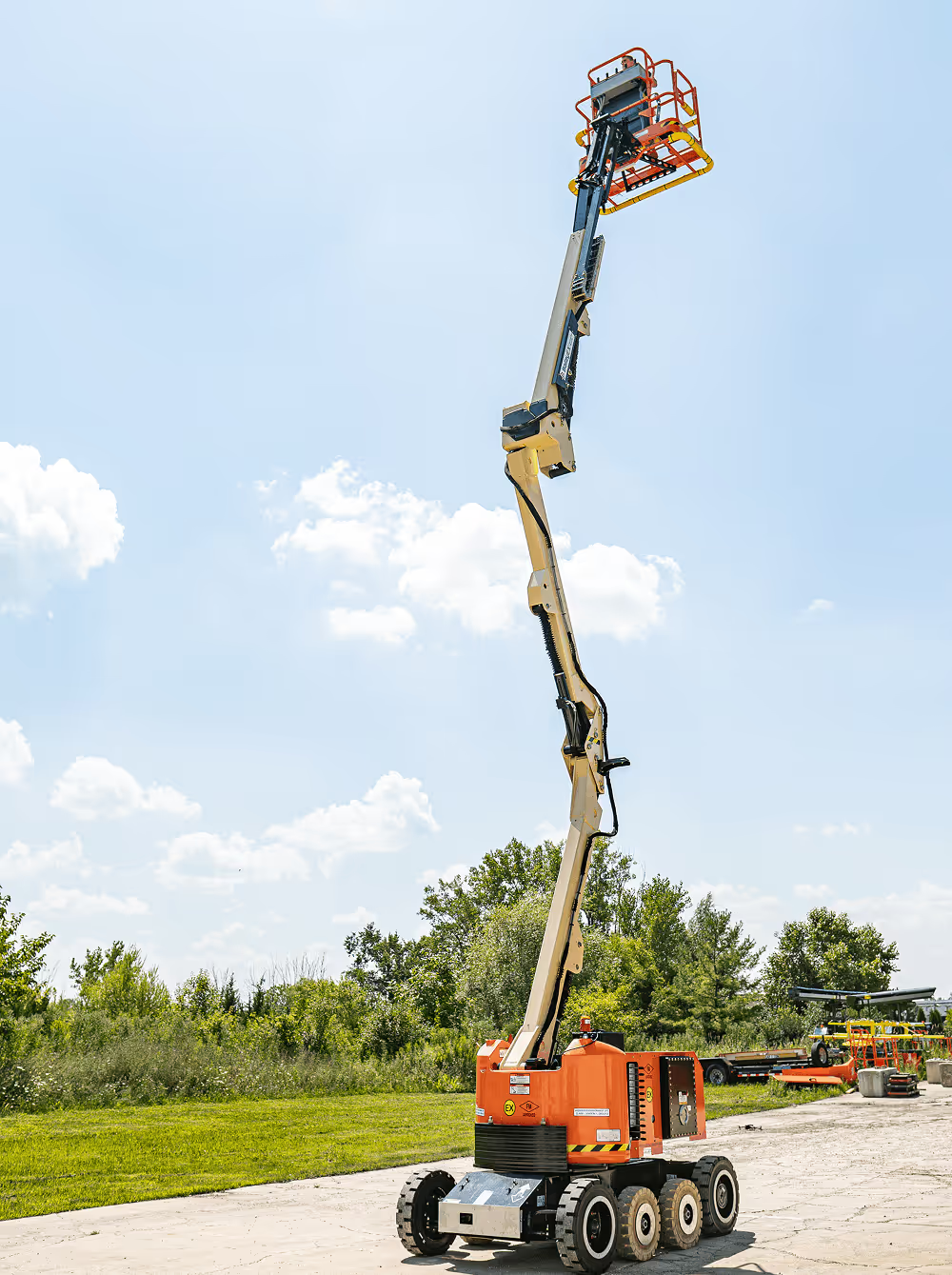
Bailey Cranes engineers next-generation, explosion-proof aerial work platforms by retrofitting proven equipment or building custom solutions to meet the highest ANSI and FM safety standards for zero-compromise hazardous environments.

EX Articulating
Booms

Working Height

36 ft - 86 ft

Lift Capacity

500 lbs

Machine Weight

7,500 - 12,000 lbs
Learn More
Right

EX Telescopic
Booms

Working Height

45 ft - 86 ft

Lift Capacity

500 lbs - 1,000 lbs

Machine Weight

8,000 - 1,200 lbs
Learn More
Right

EX Scissors
Lifts

Working Height

25 ft - 59 ft

Lift Capacity

500 lbs - 1,500 lbs

Machine Weight

9,500 - 14,000 lbs
Learn More
Right

Explosion-Proof Aerial Lifts, Built for Environments Where Safety Isn’t Optional

Bailey Cranes designs next-generation, explosion-proof aerial work platforms by retrofitting proven equipment or engineering custom solutions that meet ANSI A92.20 and FM Class standards for zero-compromise hazardous environments. Built to protect workers and outperform compliance, our EX lifts deliver precision, reliability, and control where failure is not an option.

What Sets Our EX Lifts Apart
・Advanced load-sensing technology compliant with ANSI A92.20
・Simplified hydraulic systems that reduce leak points
・Longer-lasting switching systems for improved reliability
・Fully compliant EX electrical components for hazardous locations
・Custom engineered configurations through strategic retrofitting
Gemini generated image ll3osbll3osbll3o 1
Dsc09522 1

Beyond Retrofitters. Compliance-Driven by Design.

Bailey stands apart from typical retrofitters by delivering true aerial platform engineering—backed by full stability analysis, control-system safety reviews, and complete accountability—ensuring no hidden risks in explosion-proof environments. Driven by deep involvement in developing industry safety standards, Bailey designs and certifies lifts that don’t just meet compliance requirements, but help define them.

ANSI A92.5 & A92.6

AWP standards

ANSI A92.20

Latest platform load sensing standard

FM Class 3600, 3610, 3615

Explosion-proof electrical safety

UL 583

Battery-powered EX systems

NFPA 505

Fire safety for industrial trucks

Where Our Equipment Performs

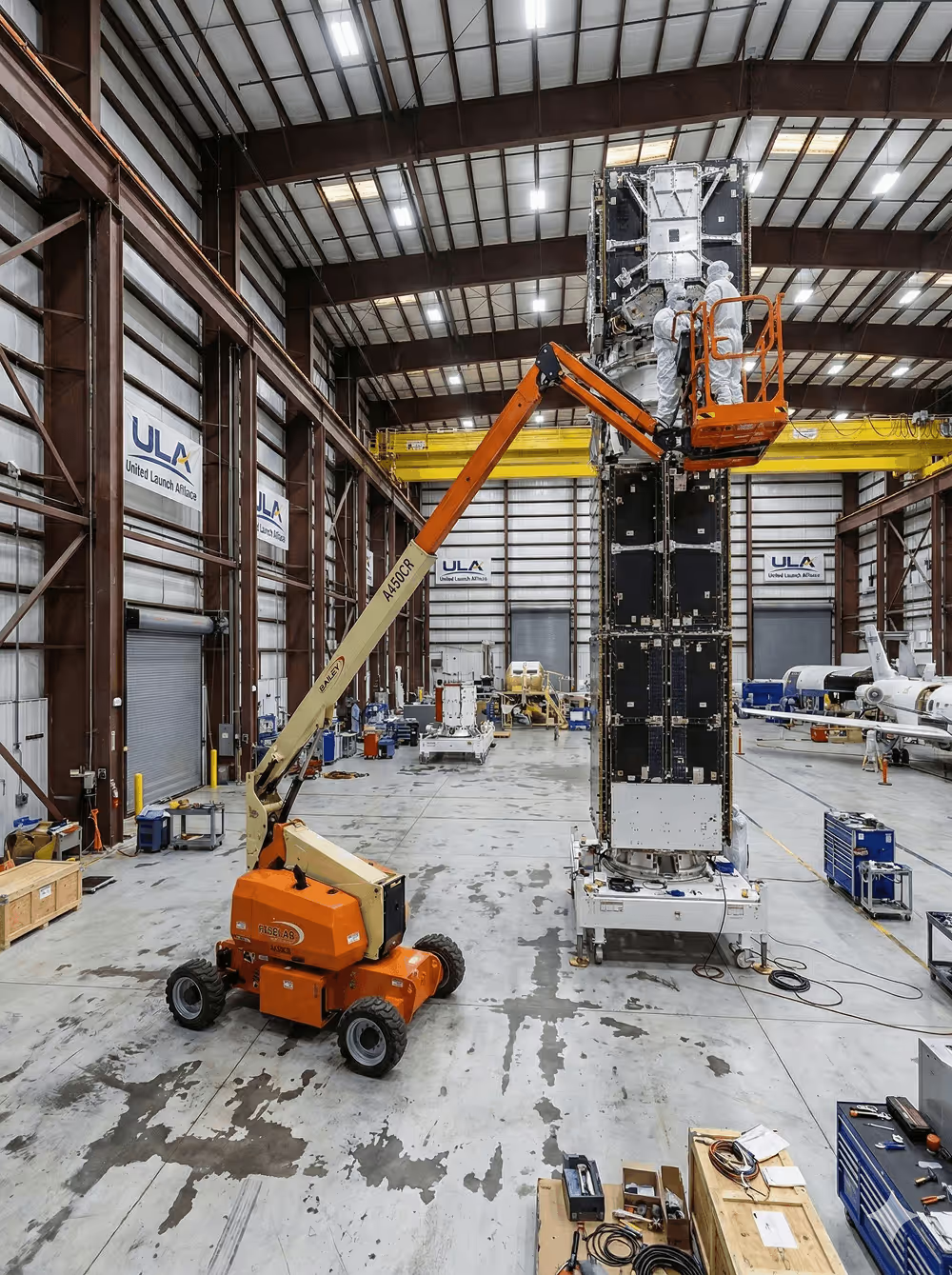
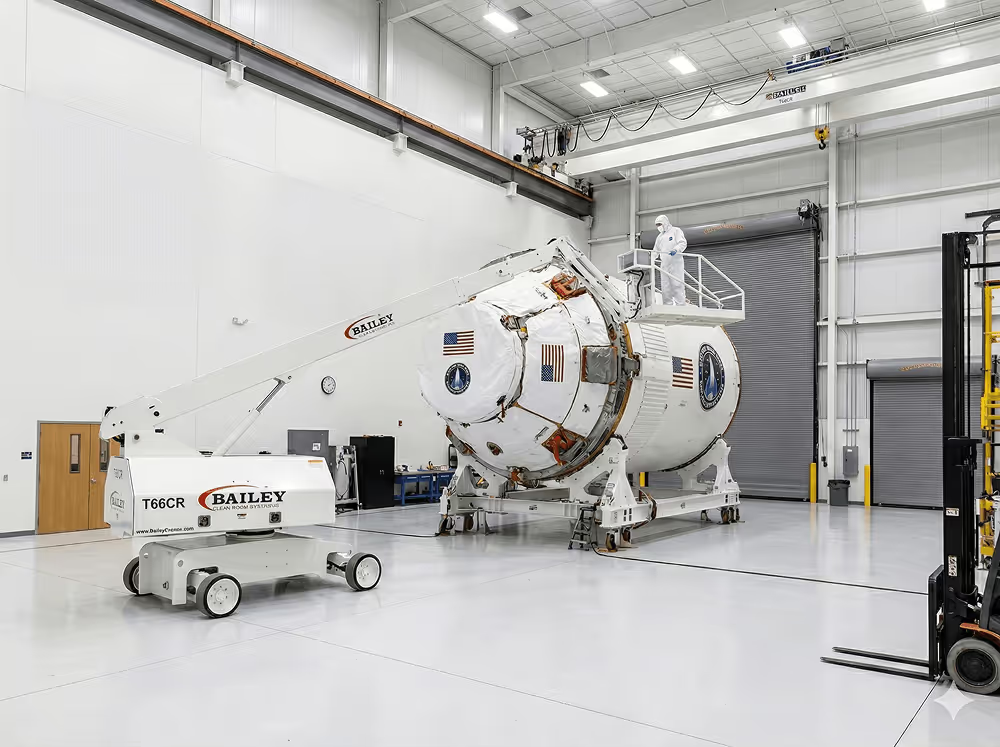
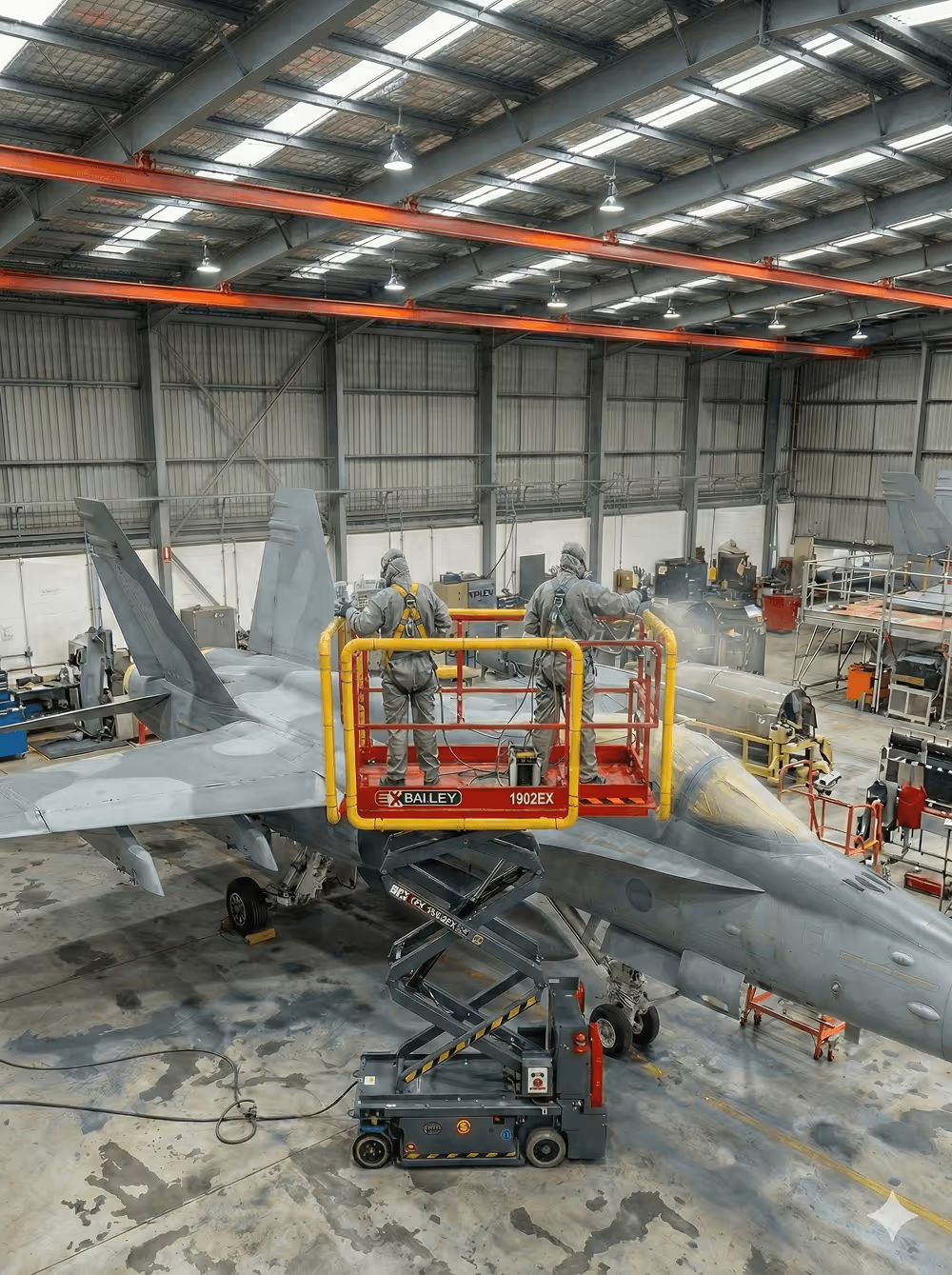
We’re trusted by the most demanding operations in aerospace, defense, and industrial manufacturing—teams where downtime is costly, and safety is non-negotiable. Our equipment operates in mission critical, cleanroom (think launching satellites), and hazardous environments where traditional lifts simply aren’t an option.
Screenshot 2025 12 29 at 1.48.46 pm

Assembly lifts for aircraft

Spirit AeroSystems, Northrop Grumman
Screenshot 2025 12 29 at 1.48.24 pm

Cleanroom satellite lifts

United Launch Alliance, Cape Canaveral
Screenshot 2025 12 29 at 1.48.31 pm

Aircraft painting EX lifts

Boeing, Lockheed Martin, Gulfstream, Bombardier
Screenshot 2025 12 29 at 1.48.39 pm

Launch platforms

UP Aerospace at Spaceport America
Gemini generated image comh2wcomh2wcomh 1

Explosion-Proof Aerial Lift FAQs

Answers to the questions procurement engineers, safety officers, and facility managers ask most often about Bailey's explosion-proof aerial lifts.

What certifications are required for explosion-proof aerial lifts?
Explosion-proof aerial lifts must meet ANSI A92.20 (the modern North American standard for mobile elevating work platforms, replacing ANSI A92.5/A92.6), FM Class 3600 / 3610 / 3615 for electrical safety in hazardous locations, and UL 583 for battery-powered industrial trucks. NFPA 505 covers fire safety for industrial trucks, and OSHA 29 CFR 1910.178 governs operation in classified locations. Bailey engineers and certifies every explosion-proof lift to all applicable standards for the customer's specific Class and Division.
What's the difference between Class I Division 1 and Class I Division 2?
Class I covers locations where flammable gases or vapors may be present. Division 1 means ignitable concentrations exist under normal operating conditions — think aircraft fuel cells, paint spray booths, or solvent-based coating lines. Division 2 means concentrations are present only abnormally, such as during an upset or leak. Equipment for Division 1 must be physically explosion-containing or intrinsically safe; Division 2 equipment is designed not to ignite under normal operation. Bailey builds aerial lifts certified for Class I Division 1 hazardous locations — the most stringent rating in the U.S.
Can a standard aerial lift be retrofitted to be explosion-proof?
Surface-level retrofits exist, but Bailey does not consider them safe. True explosion-proof certification requires re-engineering the load-sensing system, sealing every electrical enclosure to FM standards, eliminating spark sources from the entire control system, and validating stability under altered weight distributions. A retrofitter can replace some components, but stability calculations, control-system safety reviews, and accountability for the certification chain are typically not performed. Bailey designs explosion-proof lifts from the chassis up so the entire machine — mechanical, hydraulic, electrical, and control-system — is engineered as a single certified unit.
What industries need ANSI A92.20–certified explosion-proof lifts?
Aircraft maintenance and MRO facilities, aerospace paint and coatings operations, defense contractor depots, semiconductor and pharmaceutical manufacturing where solvents are present, oil & gas refining, chemical processing plants, and battery / energy-storage manufacturing all require ANSI A92.20 plus appropriate Class/Division certification. Customers include major defense primes and aerospace OEMs whose hangars contain Class I Division 1 zones around fuel cells and engine bays.
How much does a custom explosion-proof aerial lift cost?
Custom explosion-proof lifts typically run from the mid-six figures to over $1M depending on reach height, platform capacity, certification level (Division 1 vs Division 2), and any specialty attachments such as cleanroom compliance, ESD protection, or non-sparking platforms. Pricing for off-the-shelf EX scissor and boom lift models starts lower. Contact Bailey with your specific Class, Division, height, and capacity requirements for a firm quote.
What's the difference between EE-rated and EX-rated aerial lifts?
EE-rated (Electrically Enclosed) lifts have key electrical components — motors, wiring, switches — sealed inside enclosures so sparks or heat cannot reach the surrounding atmosphere. EX-rated (Explosion-Proof) is the highest level: the entire machine is engineered for use in explosive atmospheres, with no internal spark, arc, or heat source able to ignite the surrounding environment. EX is required for Class I Division 1; EE may be sufficient for Class I Division 2 depending on the specific risk assessment.
What's the typical lead time for a Bailey explosion-proof lift?
Standard EX scissor and boom lift models ship in 12–20 weeks. Fully custom configurations (specialty heights, cleanroom-grade EX combinations, or unusual capacity requirements) typically run 24–40 weeks because of certification testing and validation cycles. Bailey can provide an exact lead time once your specifications are finalized.

Proven Platforms. Precision-Engineered Solutions.

Partner with Bailey to transform proven platforms or build fully custom lifting solutions—engineered, manufactured, and supported under one roof for mission-critical environments where failure is not an option.


Contact Sales
Right
Illustration of a Bailey scissor lift platform

Bailey Cranes is a Service-Disabled Veteran-Owned engineering and manufacturing firm based in Muskego, Wisconsin. We specialize in precision access solutions for industries where the margin for error is zero.

Ringer Volume
+1  (262) 744-7893
Letter
tim@baileycranes.com
Address
S81W18561 Gemini Dr,
Muskego, WI 53150
ISO 9001 : 2015 CertificationSBA Service-Disabled Veteran-Owned Small Business certified badge

Connect

Visit Us Contact
YouTube X
© 2026 Bailey Cranes. All rights reserved.
Website developed by:
Woods Made Designs