By Bailey Specialty Cranes & Aerials
In highly regulated or hazardous industrial environments, even small design oversights can escalate into major risks, leading to shutdowns or compliance issues. Precision is non-negotiable; it is literally the foundation of safety. That’s why at Bailey Specialty Cranes & Aerials, we make sure safety and reliability are foundational to every single lift we design.
The Challenge: Power Meets Hazardous Environments
A leading global cosmetics manufacturer approached Bailey with a recurring operational challenge. Their technicians were using manual high-lift pallet jacks to raise 2,500-pound pallets into hoppers. Each lift required multiple hand-pump cycles, resulting in operator fatigue, slower workflows, and declining productivity.
The manufacturer sought a powered alternative but the application came with strict safety constraints:
- The forks needed to lower below 4 inches and raise to 40 inches.
- The lift had to safely handle 2,500 pounds with consistent performance.
- The system needed Class I Division 2 (“EE”) certification, ensuring ignition-proof operation in environments where a single spark could cause a catastrophic incident.
This wasn’t just an upgrade. It was a complete re-engineering challenge where mechanical precision, electrical safety, and compliance had to work in perfect alignment.
Bailey’s Engineering Response
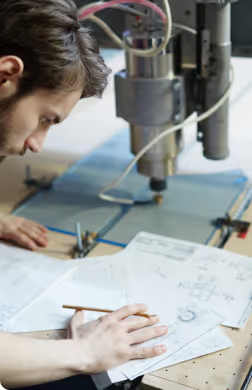
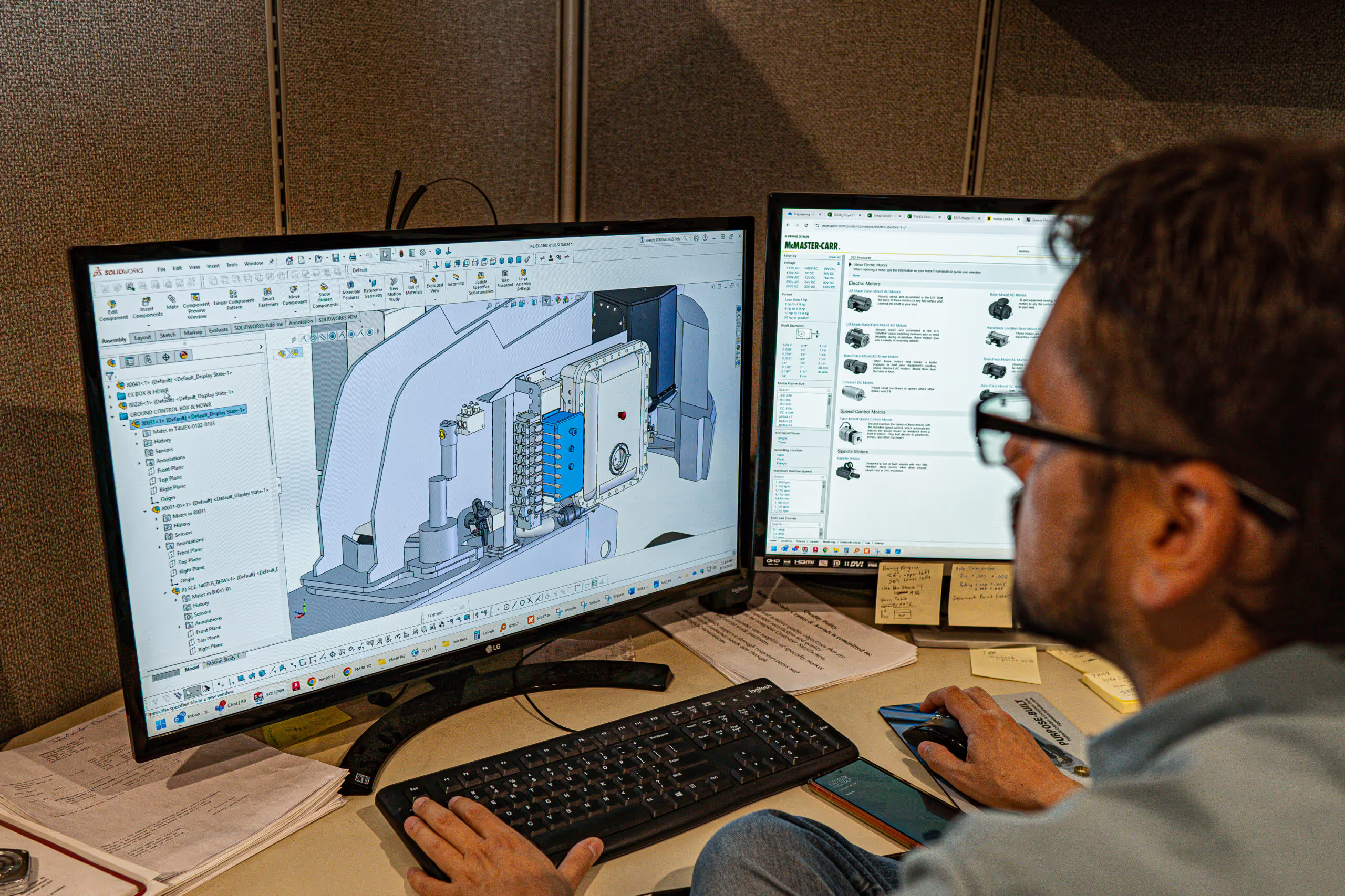
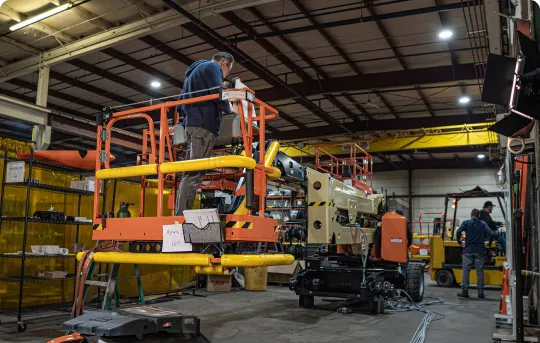
Bailey’s in-house engineering and manufacturing teams developed a custom powered lift from the ground up, specifically tailored for hazardous environments.
Key design features included:
- EE-rated motor and pump system, enclosed to eliminate ignition risk.
- Removable battery pack and charging system, allowing continuous operation with minimal downtime.
- Cold-rolled steel construction, providing strength and durability without compromising mobility.
- Third-party testing and TUV certification, validating performance under Class I Division 2 conditions.
The development process wasn’t linear. Early prototypes failed certain certifications, but that’s part of Bailey’s process. Each iteration was refined, retested, and optimized until the final design not only passed but exceeded certification and operational benchmarks.
The Result: Safer, Faster, and Fully Compliant
The new powered lift didn’t just transform the client’s production floor, it redefined efficiency and safety.
- Reduced operator strain led to greater consistency and focus.
- Shorter lift cycles improved overall throughput and workflow efficiency.
- Certification compliance satisfied both internal safety auditors and external regulators.
The final system delivered measurable performance gains, but more importantly, it gave the client long-term confidence in the safety, reliability, and compliance of their operations.
Beyond One Project: Bailey’s Engineering Philosophy
This project exemplifies Bailey’s approach: every lift is designed to solve a specific operational problem while meeting the highest safety and compliance standards.
Bailey’s engineering teams regularly design for conditions where off-the-shelf equipment cannot operate including:
- Class I Div I and Div II hazardous zones
- Corrosive plants and chemical facilities
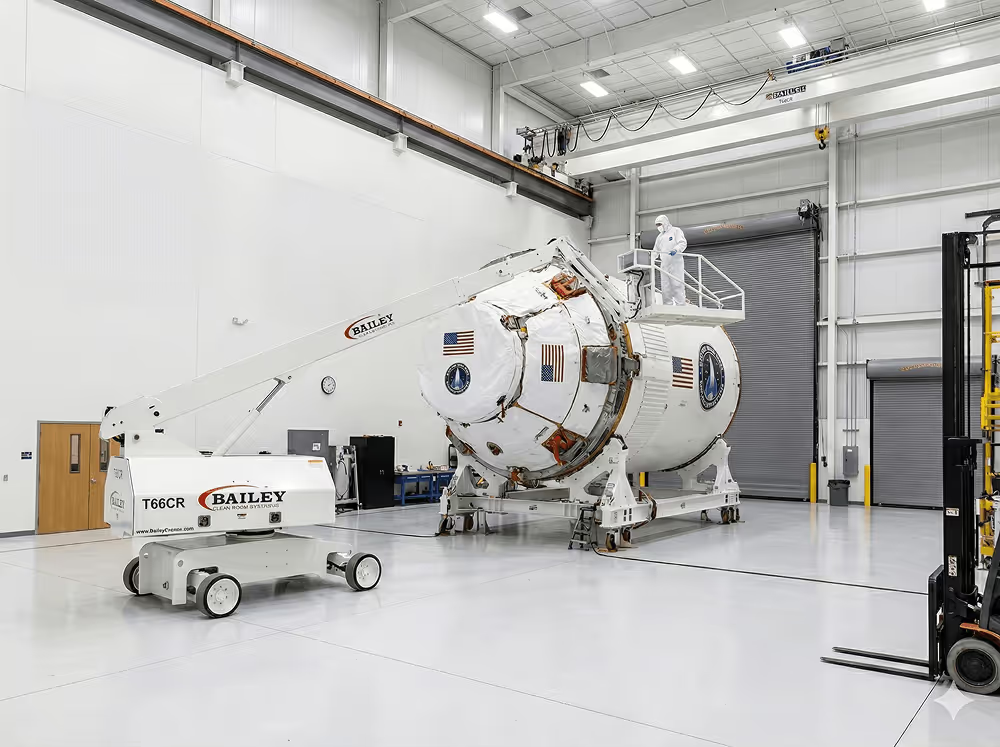
- Cleanroom and sterile manufacturing environments
- Confined, high-voltage electrical rooms
In these mission-critical environments, a single mechanical failure, electrical spark, or design shortcut can endanger people, halt production, and expose organizations to severe financial and reputational loss. Bailey’s integrated process ensures that risk is eliminated through design, not dealt with after it appears.
Built on Experience. Driven by Purpose.
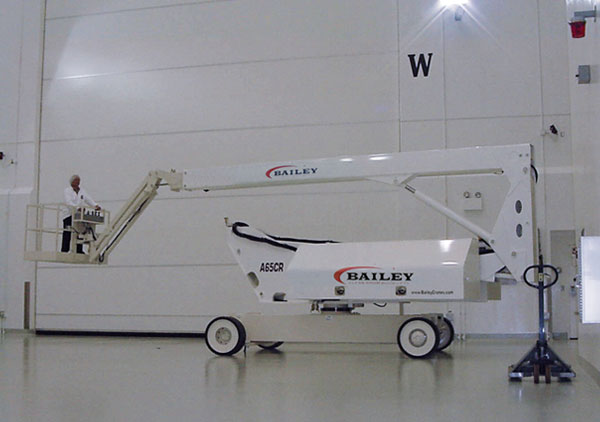
Bailey Cranes isn’t just a lift manufacturer. It’s an engineering partner for organizations where safety, uptime, and compliance are non-negotiable. Each Bailey platform is the result of decades of field-tested problem-solving, with the entire process from design and build to final certification, handled under one roof. Whether it’s an explosion-proof aerial lift or a custom EE-rated system, Bailey engineers solutions guaranteed to perform where standard equipment fails.
As Vice President of Engineering, Eric Niemi often says:
“When you’re working in environments where a single spark or slip can halt a mission, ‘good enough’ simply isn’t good enough.”
The Takeaway
In sectors where safety is synonymous with success, such as aerospace, defense, energy, manufacturing, and pharmaceuticals, equipment isn’t just a productivity tool. It’s a risk management strategy. So, when your facility operates under strict safety and compliance requirements, every piece of equipment becomes part of your risk management strategy. At Bailey, we design that strategy into every lift we build because protecting people and productivity starts with engineering precision.
Your environment defines the standard. We engineer for it.
To discuss EE-rated or custom lift solutions for hazardous or regulated facilities, contact:
tim@baileycranes.com or visit www.baileycranes.com